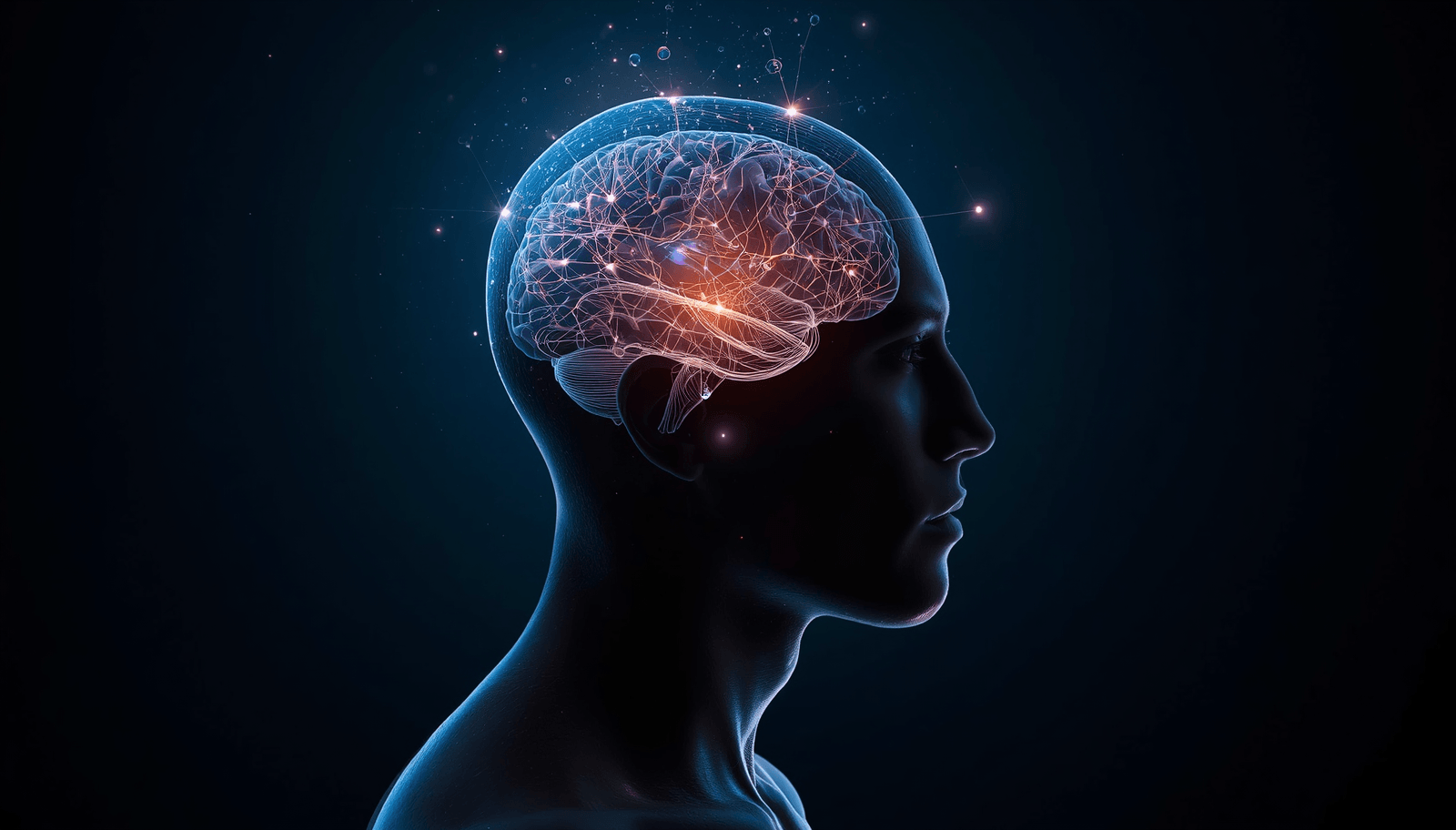
We use our brain every single day. We think, remember, make decisions, feel fear, experience happiness, and dream.
But have you ever wondered how all of this actually happens?
How can a small organ inside our skull control so many things?
Does the brain simply control our body or does it also create the way we experience the world around us?
What we see, hear, feel, and remember—is the world really the way we experience it?
And perhaps the biggest question of all—
Do we control our thoughts, or are our thoughts themselves being created by the countless processes taking place inside our brain?
As we try to find answers to these questions, we enter a fascinating world that is still filled with many mysteries.
Table of Contents
- What Makes Humans Different from Other Animals?
- How Does the Brain Actually Work? The Brain as a Virtual Reality (VR) System
- The Brain and the Mind: A Game of “Hardware” and “Software”
- Are You Really Living in the Moment—or Running on Autopilot?
- Do I Create My Thoughts—or Do Thoughts Simply Appear in My Mind?
- Your Brain Doesn’t Always Show You the Complete Truth
- “As Is the Body, So Is the Universe” — Microcosm to Macrocosm
- Did You Know? Fascinating Facts About the Human Brain
- One Final Thought
What Makes Humans Different from Other Animals?
There are countless living creatures on Earth.
They eat, sleep, feel fear, care for their young, and adapt to their surroundings. But there is something remarkably different about humans.
We don’t simply react to the world around us.
We can think about it,
question it,
and even think about our own existence.
We can imagine the future.
We can remember the past.
We can imagine things that do not even exist yet.
We can create art, music, science, language, and technology.
And perhaps most importantly—we can think about ourselves.
One important part of the human brain is the neocortex, which plays a major role in complex functions such as thinking, language, planning, and understanding.
But the brain is far more than a thinking machine. It contains emotions, memories, fears, desires, and countless complex processes that continue working every moment.
Our brain helps us understand the present, learn from the past, and imagine the future. Sometimes, it almost feels as though an entire world is constantly unfolding inside our heads—
a world that we ourselves do not completely understand.
How Does the Brain Actually Work? The Brain as a Virtual Reality (VR) System
Imagine that you are inside a Virtual Reality (VR) system.
You can see a world in front of you. You hear sounds, see objects, and feel as though you are actually inside that world.
In a fascinating way, our brain does something somewhat similar.
Our eyes, ears, skin, and other sensory systems are constantly collecting information from the environment.
Light entering our eyes, sound reaching our ears, and sensations detected by our skin—all of this information is transmitted through the nervous system to the brain.
The brain processes these signals and creates an experience of the world for us.
In other words, we do not experience the outside world directly.
Our brain processes the information received through our senses and builds our experience of reality.
Pain is a prime example of this,
When a part of your body is injured, signals travel from that area toward the brain. The brain processes those signals, and you experience pain.But this raises an interesting question—
If the brain processes these signals, is our experience always an exact representation of reality?
Think about a VR system.
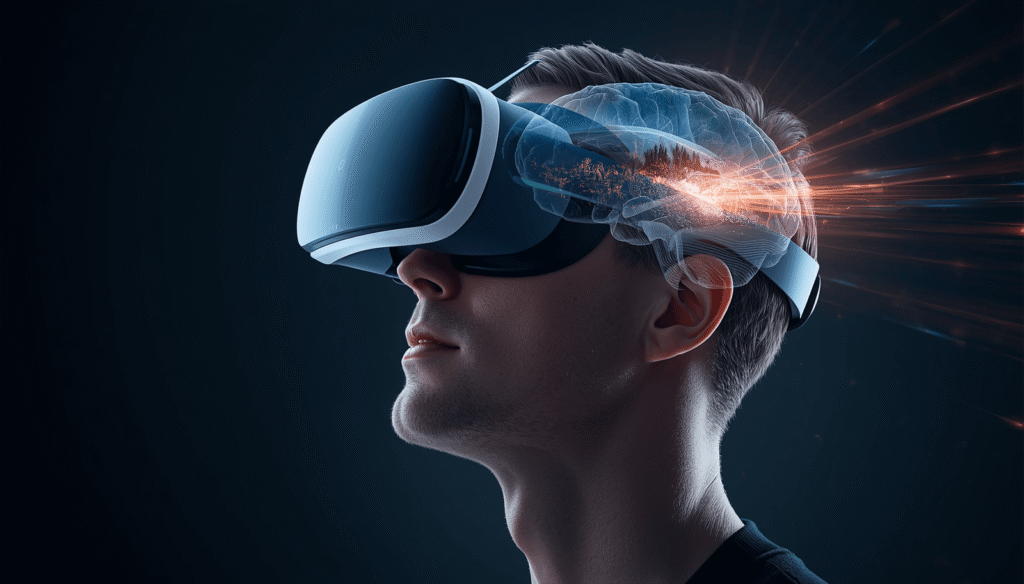
You may know that the world inside it is digital, yet it can still feel remarkably real.
To some extent, our brain also creates our experience of reality from the signals it receives from the outside world.
And this leads to another fascinating question—
Is the world we experience exactly the same as the world that actually exists?
Perhaps not.
Because what we see and feel is influenced not only by information coming from the outside world, but also by the way our brain processes and interprets that information.
The Brain and the Mind: A Game of “Hardware” and “Software”
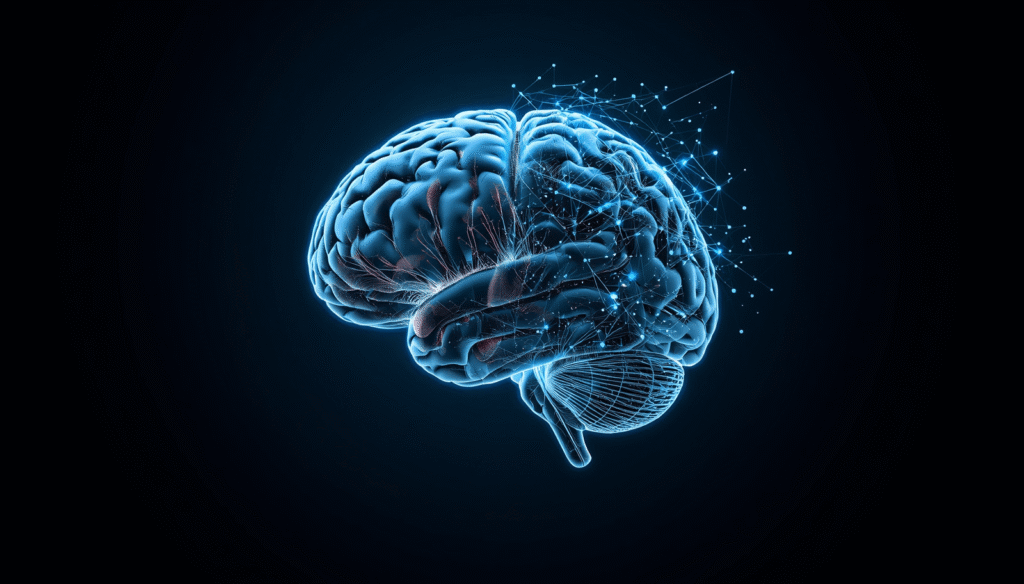
The relationship between the brain and the mind can be illustrated using the idea of hardware and software.
The brain is our biological hardware. It contains billions of neurons, their connections, and countless biological structures.
But what about the mind?
Our thoughts, emotions, memories, imagination, experiences, and sense of self are much more difficult to define.
You can think of them, in a simplified way, as something similar to software.
But there is an important difference.
Computer hardware and software are separate things. The relationship between the human brain and our mental processes is far more complex.
Our thoughts are not simply files stored in one particular location.They are connected to electrical and chemical signals between neurons, neural connections, and constantly changing patterns of brain activity.
A childhood experience may still be part of your memory decades later.
Seeing someone’s face may suddenly bring back an old memory.
A particular song may instantly bring back a forgotten emotion.
Our experiences do not simply sit inside the brain like stored files.They become part of the complex mental world we carry with us.
And this brings us to one of the greatest mysteries—
How does the activity of billions of neurons and their complex connections give rise to the feeling of being “me”?
Where does consciousness actually come from?
This remains one of the great questions at the intersection of science and philosophy.
Are You Really Living in the Moment—or Running on Autopilot?
Think about your daily routine.You wake up, get ready, have tea or coffee, check your phone, go to work, follow familiar routines, and repeat many of the same actions every day.
But how many of these things do you actually do with full awareness?
Sometimes we are doing something while our attention is somewhere completely different.
We may travel along the same route every day and suddenly realize that we barely remember most of the journey.
This happens because the brain turns frequently repeated actions into automatic processes.
The more often we perform something, the more familiar and automatic it can become.
For the brain, this can be an efficient way to manage limited attention and mental resources.
But there is another side to it.
If a large part of our life is driven by habits, automatic reactions, and routines, are we truly experiencing every moment?
Sometimes it is worth asking yourself—
“Am I doing this because I genuinely want to, or simply because I have always done it this way?”
That question can help us understand our habits, decisions, and behaviour more deeply.
Do I Create My Thoughts—or Do Thoughts Simply Appear in My Mind?

Have you ever been busy with something when an old memory suddenly appeared in your mind?
You were thinking about one thing, and suddenly another thought came from nowhere.
Sometimes you struggle with a problem for a long time, and then suddenly
“Wait… I know the answer!”
Where did that thought come from?
Did you consciously create it, or had your brain already been working on the problem before you became aware of the answer?
Science does not yet have a complete answer to this question.
But we do know that many neural processes are constantly taking place behind our conscious thoughts.
Our brain can be processing information before we become consciously aware of it.
That is why the question—
“Where does a thought actually come from?”
remains fascinating to both science and philosophy.
Your Brain Doesn’t Always Show You the Complete Truth
Look at yourself in a mirror.
It feels as though you are simply seeing yourself.
But in reality, light reflected from your body or the mirror enters your eyes. The information is then transmitted through the nervous system to the brain, where it is processed into the visual experience you perceive.
This is one reason optical illusions can sometimes fool us.
A stationary object may appear to move.
The same image can be interpreted differently by different people.
Sometimes we fail to notice a major change in front of us because our brain does not immediately register it.
So what we see is not simply the information received by our eyes.
It is something more like
Information received by the senses + the brain’s processing = our experience.
So the next time you think—
“What I am seeing is exactly what is real.”
pause for a moment.
Is it the outside world itself?
Or is it your brain’s interpretation of that world?
And if our brains interpret the world, another fascinating question follows
Why can two people experience the same event so differently?
Perhaps because we don’t simply see the world.
We also give meaning to the world through our brains.
“As Is the Body, So Is the Universe” — Microcosm to Macrocosm
Thousands of years ago, Indian philosophy expressed a fascinating idea
“Yatha Pinde Tatha Brahmande.”
It suggests that there may be some form of similarity or reflection between the microscopic world within our body and the vast universe around us.
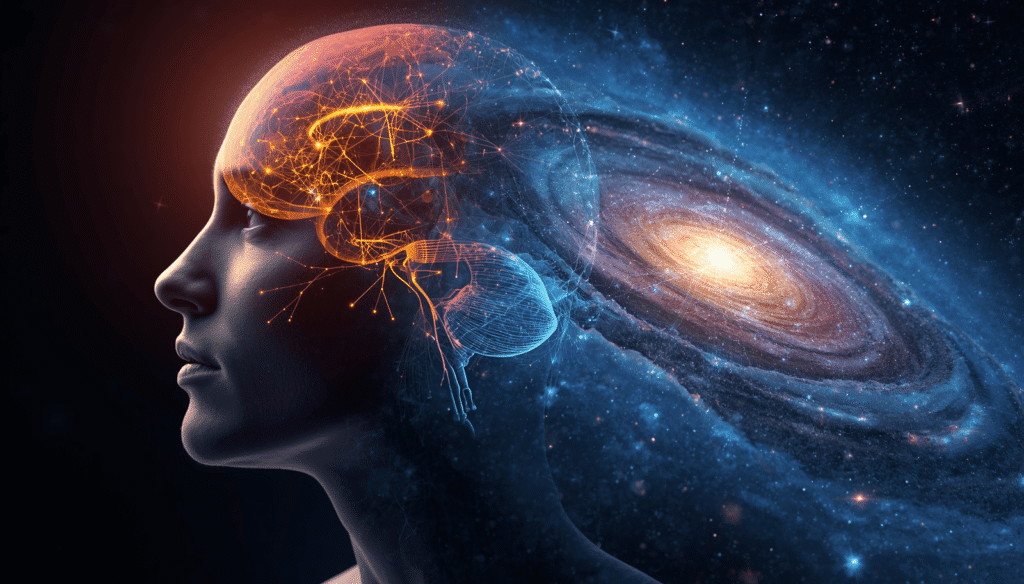
Modern science has also brought forward a fascinating observation.
Research has suggested that there are some network-level similarities between the network of neurons in the human brain and the large-scale cosmic structures found throughout the universe.
This does not mean that the human brain and the universe are the same thing. There is no scientific conclusion that they are identical.
But the idea itself is certainly fascinating.
Inside our skull is a network made up of billions of cells,while the universe contains enormous structures spread across billions of light-years.
When we look at both, some patterns can appear remarkably similar at the level of networks.
And this leads to a beautiful philosophical thought—
“Are we living beings looking out at the universe, or is the universe, in some strange way, looking at itself through our eyes in order to understand itself?”
That question takes us closer to philosophy than science.
But perhaps that is exactly what makes it so beautiful.
Did You Know? Fascinating Facts About the Human Brain
The Brain Itself Does Not Feel Pain
Brain tissue itself does not contain the pain receptors required to directly sense pain.
This is why, during certain types of brain surgery, a patient may sometimes be kept awake so that doctors can talk to them and observe their responses.
The Brain Keeps Using Energy Even While You Sleep
Even when you are asleep, your brain does not simply switch off.
It continues working.
The human brain uses roughly 20 watts of energy, which is why it is often compared to the energy consumption of a small light bulb.
But your thoughts are not simply electrical waves.
They involve both electrical and chemical neural signaling.
The Brain Contains a Large Amount of Water
The brain contains a high proportion of water, and maintaining the body’s water balance is important for normal brain function.
When the body becomes dehydrated, it can affect attention, mood, and cognitive performance.
Your Memory Is Not Like a Pen Drive
If we imagine the brain as a Pen Drive, we cannot simply say that its memory capacity is a specific number of gigabytes.
Human memory does not work like computer storage.
Our memories are associated with changes in connections between neurons and within neural networks.
And perhaps that is exactly what makes memory so mysterious.
How can the smell of something from your childhood suddenly take you 20 years back in time?
How can hearing a particular song suddenly make you remember someone you had almost forgotten?
Why do we forget some memories while others remain with us for our entire lives?
Do we preserve our memories, or do our memories gradually shape who we become?
One Final Thought
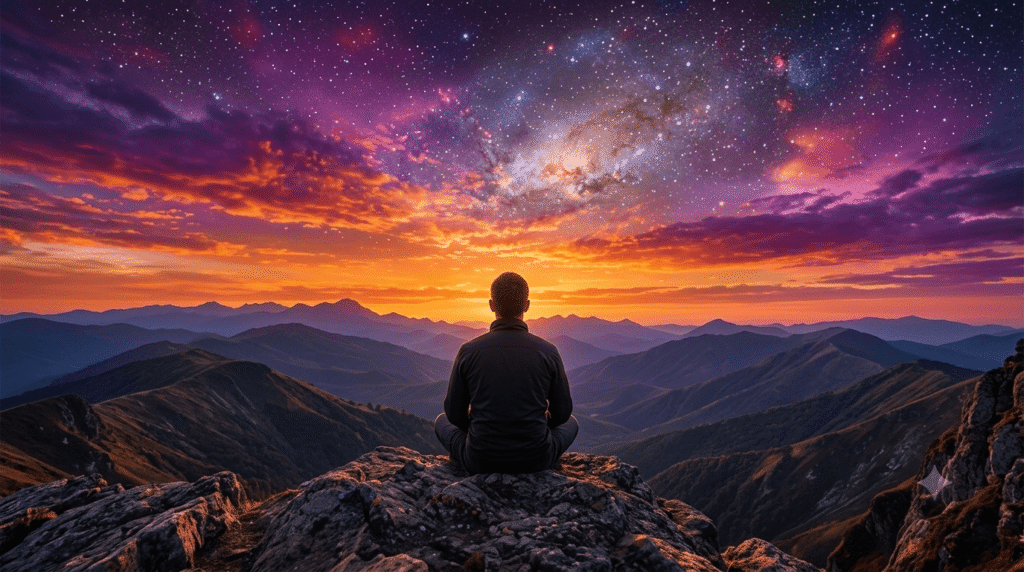
The more I think about this immense complexity, the more I feel that my brain is using my body as a kind of vehicle to keep itself alive.
It makes me feel hungry so that I eat food and obtain the energy needed to keep the system functioning.
It makes me feel fear so that I can stay safe—and so that it can continue to survive.
It makes me feel pain so that I move away from danger.
And yet, it gives me something incredibly beautiful and precious.
But in return, it gives me—the feeling of being “me” — Consciousness.
Without consciousness, I would have no sense of “self” with which to experience the beauty of this vast universe.
The next time you look at your own face in the mirror, remind yourself of this—
You are not merely the face you see from the outside.
You are an extraordinary, living biological system inside that face—one that has the remarkable ability to observe itself and try to understand itself.
But now, think about this—
If, in the future, technology allows the human brain to truly overcome death and achieve immortality, will human beings still experience the real joy of living in a life that never ends?
Or—
will we become permanently trapped inside a digital prison of our own creation?
References
Scientific research and related studies published by NCBI, PubMed, and Frontiers in Physics.