Have you ever had a dream so real that, for a few seconds after waking up, you couldn’t figure out what reality actually was?
Have you ever jumped off a high mountain in your sleep? Talked to a loved one who is no longer in this world? Or woken up suddenly, terrified by a heavy, suffocating pressure on your chest?
Almost everyone in the world experiences these things at some point.
But the mystery of dreams remains a profound question today: When we close our eyes, who creates the world we enter?
Is it merely a trick of the brain? Or do dreams hold secrets that science has yet to fully unravel?
Humanity has been asking this question for thousands of years.
The sages of ancient India, Egyptian priests, Greek philosophers, modern psychologists, and today’s neuroscientists—all have tried to decode the meaning of dreams. Yet, everyone has a different answer.
Today, science offers explanations based on REM sleep, neurons, memories, and emotions. On the other hand, Indian spirituality, the Upanishads, and many ancient cultures don’t view dreams merely as a biological process. To them, dreams can be a part of consciousness, the subconscious mind, or even spiritual experiences.
So, what is the truth?
In this article, we won’t force any single belief upon you. Instead, we will calmly explore available scientific research, historical context, and various philosophies.
And in the end, we will leave the decision up to you.
Because the true goal of Jigyasa Manthan is not merely to provide answers, but to teach you how to ask the right questions.
💡 Did You Know?
People can experience several dream episodes during a single night, especially during periods of REM sleep. However, within minutes of waking up, much of what they dreamed is often forgotten.
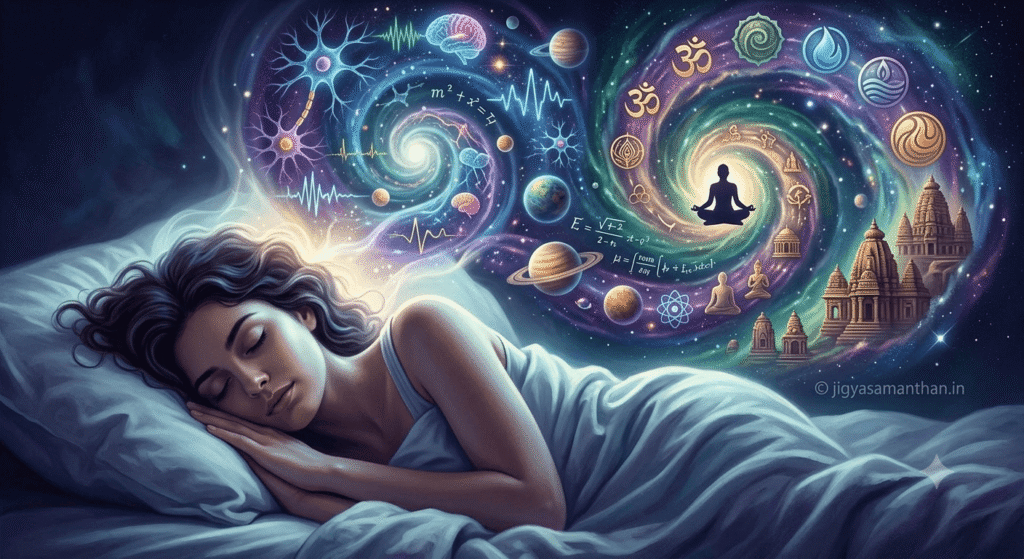
Table of Contents
- When Did Humans Start Dreaming? History, Spirituality, and the First Records
- Through the Lens of Science: How Are Dreams Actually Formed?
- How Was REM Discovered?
- Sleep Paralysis: What Happens When You Feel a Heavy Weight on Your Chest?
- Sleepwalking: A Dreaming Brain and a Walking Body?
- Do Blind People Dream?
- Lucid Dreaming: Knowing You Are Dreaming While Dreaming?
- Do Animals Dream?
- Quick Summary
- Conclusion: Has the Ultimate Mystery of Dreams Been Unraveled?
- What do you think?
1. When Did Humans Start Dreaming? History, Spirituality, and the First Records
The exact moment the first human had their very first dream, perhaps one of humanity’s oldest questions was born—”What exactly is this?”
Today, we study dreams with the help of modern science. But curiosity about dreams isn’t new. Cultures from thousands of years ago also wanted to understand this mystery.
In many ancient civilizations, dreams were not just seen as “nighttime pictures.” Many believed they were messages from the gods, glimpses into the future, or a medium to communicate with the subconscious.
Ancient Egypt: Messages from the Gods?
Around 4,000 years ago in ancient Egypt, dreams were given immense importance.
Ancient Egyptian texts contain records interpreting dreams. Back then, specific priests decoded people’s dreams, and people would even sleep in special temples, praying to receive a “meaningful dream.” According to their beliefs, certain dreams were direct signals from the divine.
Ancient Greece: Healing and Dreams
Ancient Greece also held dreams in high regard.
Sick people would sleep in the temples of Asclepius, the god of medicine. The belief was that the god would guide them or suggest a cure for their illness in their sleep. (This was a religious tradition; modern science does not validate it.)
Indian Tradition and the Upanishads
In Indian philosophy, dreams have been analyzed with incredible depth.
The Mandukya Upanishad describes four states of human experience:
- Jagrat (Waking state)
- Swapna (Dreaming state)
- Sushupti (Deep, dreamless sleep)
- Turiya (The spiritual state beyond these three)
Here, a “dream” is not just an event during sleep, but a profound subject of study regarding consciousness. According to certain Indian philosophical traditions, dreams can be reflections of our deepest impressions (Samskaras), experiences, and the subconscious mind. While spiritual traditions give them deeper, mystical meanings, this remains a realm of faith and philosophy, not scientific conclusion.
💡 Did You Know?
One of the oldest written records about dreams in the world is the “Chester Beatty Dream Book” from ancient Egypt. It records the auspicious and inauspicious meanings of various dreams.
🤔 Jigyasa Manthan
Today, we look back at ancient beliefs as history. Yet, modern science still hasn’t unraveled every secret of dreams. So perhaps the right question isn’t “Who is right?” but rather… “Why has humanity tried to decode dreams for thousands of years?” Perhaps the very first answer to the mystery of dreams lies in that question.
2. Through the Lens of Science: How Are Dreams Actually Formed?
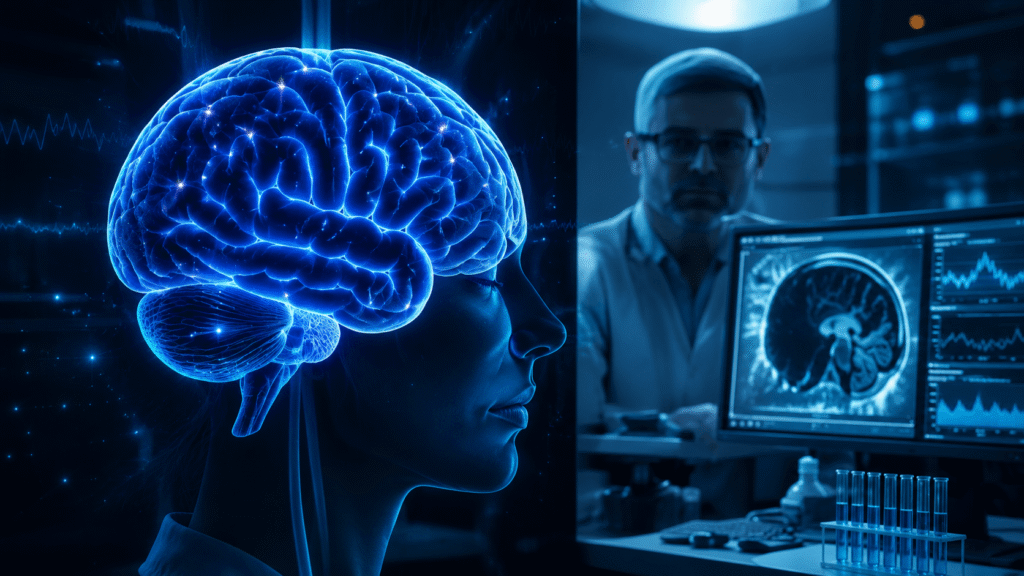
If sleep is supposed to be rest, then why is the brain so active while we sleep?
Many people think that when we sleep, our brain rests too. But in reality, that’s not true.
While we sleep, our brain is constantly working. It stores the day’s memories, organizes new information, processes emotions, and regulates vital bodily functions.
This is also the time when dreams are created.
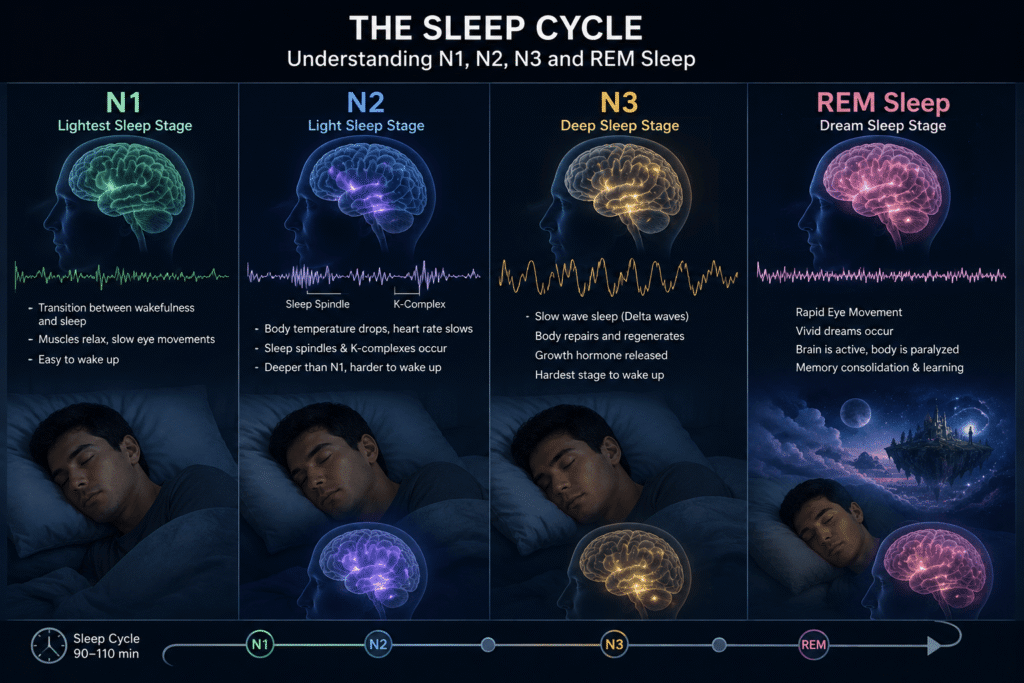
The Four Stages of Sleep
N1 – Light Sleep: The first stage. The body slowly calms down, and the brain transitions from waking to sleeping. Sometimes, in this stage, you might suddenly jerk awake or feel like you are falling.
N2 – Stable Sleep: Heart rate slows down, body temperature drops, and muscles relax further. The majority of our nighttime sleep is spent in this stage.
N3 – Deep Sleep: This is considered the most crucial stage for the body. During this time, the body undergoes important restorative processes, and growth hormone is released in significant amounts. Deep sleep is an important part of feeling physically refreshed.
REM Sleep – The World of Vivid Dreams: Multiple times a night, we enter a special state called REM (Rapid Eye Movement). During this phase, your eyes are closed, but they move rapidly beneath your eyelids. Brain activity becomes more similar to wakefulness, and vivid, lifelike dreams are especially common during this stage. However, dreaming can also occur during NREM sleep.
How Was REM Discovered?
In 1953, researchers Eugene Aserinsky and Nathaniel Kleitman noticed something astonishing while studying sleep. They saw that a sleeping person’s eyes were moving rapidly under their closed eyelids. Further research revealed a strong connection between REM sleep and vivid dreaming. This discovery is considered one of the important breakthroughs in modern sleep science.
Why Do Impossible Things Feel Real in Dreams?
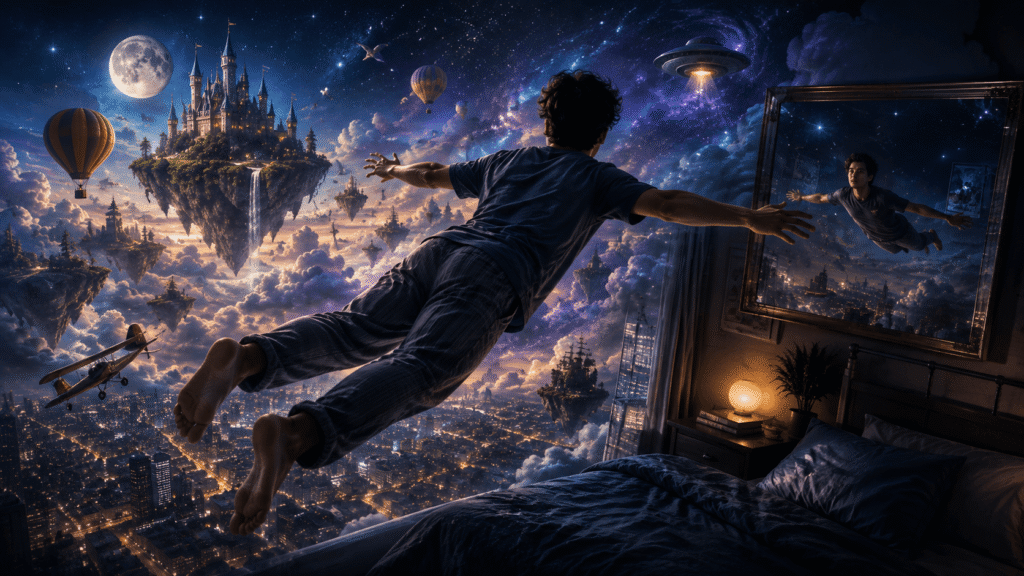
Imagine you are flying in the sky. Or talking to someone who passed away years ago. Yet, in that moment, it doesn’t feel weird to you. Why?
According to researchers, during REM sleep, some brain regions involved in higher-order reasoning and logical evaluation show reduced activity, while brain systems involved in emotions and imagery remain highly active. That is one reason why even the most impossible things can feel completely real in a dream.
🤔 Jigyasa Manthan
Today, science tells us which parts of the brain are active during dreams. But one question remains unanswered: How do electrical signals and chemical reactions create a subjective experience? Why do we feel fear? Why do we feel joy? These questions remain among the greatest mysteries in consciousness studies. Perhaps science will provide clearer answers in the future, or perhaps… our journey to understanding reality has only just begun.
3. Sleep Paralysis: What Happens When You Feel a Heavy Weight on Your Chest?
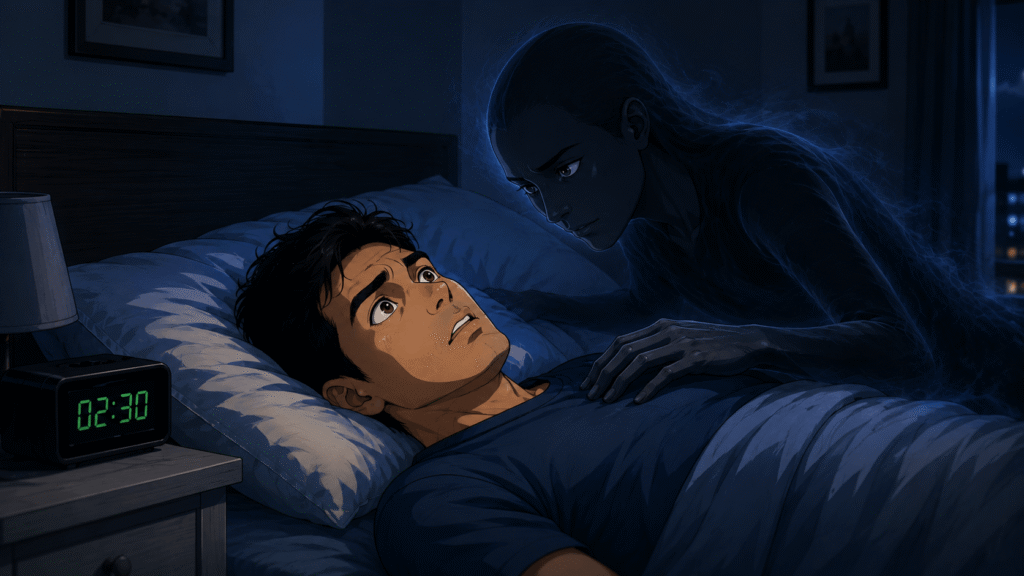
You are awake… your eyes are open… you can see the room… but you cannot move a single muscle. What would you think in that moment?
Millions of people worldwide have reported experiencing this. Some feel like someone is sitting on their chest. Some see dark shadows in the room. Others feel a strong sense of a presence watching them.
In the past, these experiences were linked to ghosts, witchcraft, or invisible entities. But modern sleep science views this entirely differently.
What Does Science Say?
During REM sleep, even if you are running, flying, or fighting in your dream, the brain normally suppresses activity in most skeletal muscles so you don’t act out those movements in real life. This natural mechanism is called Muscle Atonia.
Sometimes, a temporary mismatch occurs:
Your brain wakes up, but your body is still experiencing REM-related muscle atonia.
As a result, the person can see everything, but the body cannot move. This is called Sleep Paralysis.
But why the shadows and creepy figures?
Researchers explain that during this state, dream-related brain activity can overlap with the person’s perception of the real environment. For a few terrifying seconds, reality and dream experiences can overlap. This can cause hallucinations such as seeing figures, hearing strange noises, or feeling a heavy weight on the chest.
4. Sleepwalking: A Dreaming Brain and a Walking Body?
In sleep paralysis, the body cannot move. But for some people, the exact opposite happens. They get up, walk, talk, or even do simple chores while fast asleep.
This is known as Sleepwalking (Somnambulism). It usually happens during deep NREM sleep, particularly N3.
REM Sleep Behavior Disorder (RBD)
There is another distinct condition called REM Sleep Behavior Disorder (RBD).
Normally, the body should be relatively still during REM sleep, but in RBD, the normal muscle paralysis of REM sleep is reduced or absent.
Because of this, if a person is running in their dream, their actual legs might move in bed. If they are fighting, they might throw punches. Sometimes, they even shout. This is a medical condition diagnosed by doctors.
🤔 Jigyasa Manthan
Today, science explains the biological processes behind Sleep Paralysis and Sleepwalking. But there are still so many unanswered questions about consciousness. Why are the experiences between being awake, being asleep, and dreaming so vastly different? Perhaps in the future, we will get clearer answers. And perhaps… the greatest discoveries about human consciousness are yet to be made.
5. Do Blind People Dream?
If a person has never seen light in their entire life, what do they experience in their dreams?
The answer is—yes, blind people do dream. But their dreams aren’t necessarily like everyone else’s.
People blind from birth: Since their brains have never processed visual information through vision, their dreams are more likely to be rich in sounds, touch, smells, tastes, and emotions rather than visual imagery.
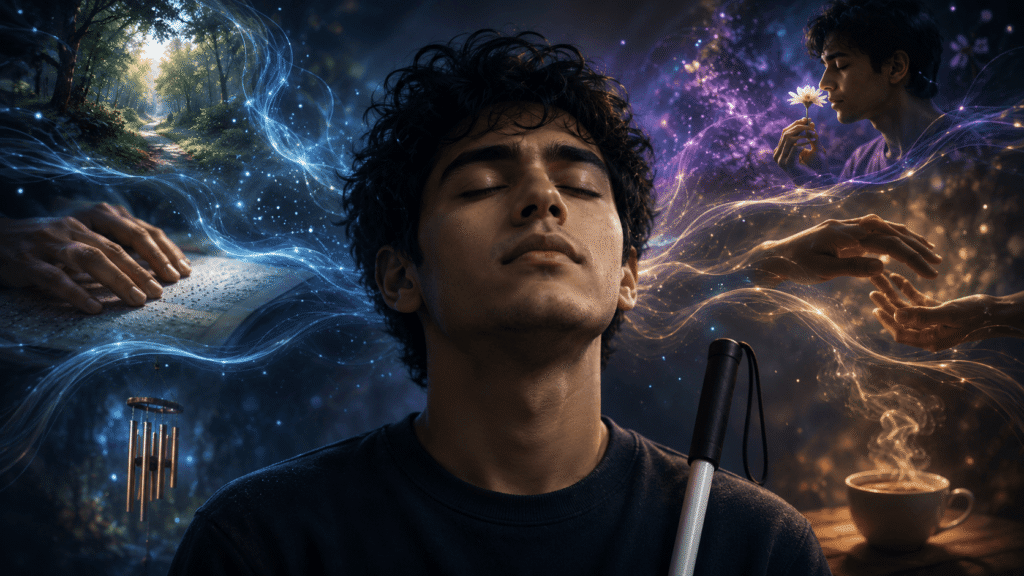
People who lost their sight later in life: Those who have seen the world for some time before losing their vision can still have visually-based dreams drawing from their past memories.
This proves a fascinating point: Eyes only collect data. The actual “experience” is entirely manufactured by the brain.
6. Lucid Dreaming: Knowing You Are Dreaming While Dreaming?
Sometimes, right in the middle of a dream, you suddenly realize—”Wait… this is a dream!”
This phenomenon is called Lucid Dreaming.

Some people can even gain limited control over their dreams in this state, allowing them to fly, visit specific places, or meet certain people at will. While science is actively researching this, many aspects of it are still not fully understood.
7. Do Animals Dream?
If humans dream… what about dogs? Cats? Birds? Mice?
Current research suggests that many animals experience REM sleep, leading scientists to believe they may also have dream-like experiences.
The Famous MIT Experiment
Researcher Matthew Wilson at MIT conducted experiments involving rats trained to navigate mazes. During later periods of REM sleep, researchers recorded patterns of brain activity resembling those observed while the rats were navigating the maze during wakefulness.
These findings suggested that the rats’ brains were replaying aspects of their earlier experiences during sleep. However, scientists cannot directly know exactly what a rat experiences or “dreams” during sleep.
If you have a pet dog or cat, you’ve probably seen their paws twitching, tails wagging, or heard them making tiny noises while asleep. Scientists believe these behaviors can occur during sleep and may be associated with REM-related activity.

Quick Summary
- Ancient cultures gave diverse, often spiritual, meanings to dreams.
- Modern science explains dreams through brain activity, sleep stages, memories, emotions, and other biological processes.
- REM sleep is strongly associated with vivid dreaming, although dreams can also occur during NREM sleep.
- Sleep Paralysis is a temporary mismatch between an awake brain and REM-related muscle atonia.
- Sleepwalking and REM Sleep Behavior Disorder (RBD) are entirely different sleep phenomena.
- Blind individuals dream too, though their sensory experience varies.
- Research suggests many animals experience REM sleep and may have dream-like experiences.
Conclusion: Has the Ultimate Mystery of Dreams Been Unraveled?
Today, science has made massive leaps in understanding dreams. Research into brain mechanics, REM sleep, memory, emotions, and neurons has greatly helped us decode this nightly phenomenon.
At the same time, Indian philosophy, the Upanishads, and ancient civilizations look at dreams through a completely different lens—not just as biology, but as a gateway to consciousness and the deeper self.
These are two distinct perspectives: one rooted in empirical scientific evidence, the other in philosophy and spiritual inquiry.
🤔 Jigyasa Manthan
History teaches us that human knowledge is always evolving. Things once considered absolute truths were rewritten when new evidence emerged. Today’s scientific explanations are the best framework we have based on current evidence.
Perhaps we are only looking at reality through a small, limited window of human experience. And perhaps… the ultimate secret of dreams is still waiting to be discovered.
It is this exact curiosity that keeps science experimenting, philosophy questioning, and humanity searching for the truth.
A Final Thought
“The true value of some questions lies not in their answers, but in the journey of exploration they inspire.”
What do you think?
Do you believe dreams are strictly a biological process of the brain, or is there a deeper, undiscovered mystery hiding behind them? Let me know your thoughts in the comments below! Your perspective might give other readers a whole new way to look at this mystery.