
We often hear the word history. At school, we learn about kings and queens, ancient civilizations, wars, old kingdoms, and important events from the past. Sometimes, history may seem like a subject that involves remembering old events and dates.
But is history really just about that? How did humans learn about their ancestors? Before writing developed, how did people learn about events that had happened long before their time? Why did people feel the need to pass their ancestors’ experiences, traditions, and knowledge on to future generations?
Exploring these questions helps us understand the meaning of history more clearly.
History is not simply a record of what happened in the past. It is the study of human life, societies, cultures, and changes over time through the examination of available evidence.
In this article, we will explore what history is, how humans developed an awareness of the past, how knowledge was preserved before written records existed, and why history continues to be important in human life.
Table of Contents
- What Is History?
- How Did Humans Develop an Awareness of the Past?
- How Was Knowledge of the Past Preserved Before Written Records?
- The Development of Writing and Written History
- How Do We Learn About Periods Before Writing?
- Why Did Humans Need to Preserve Information About the Past?
- Human Memory and the Ability to Think About the Past
- Why Evidence Matters in the Study of History
- Why Is the Study of History Still Important Today?
- Conclusion
1. What Is History?
In simple terms, history is the study of past human life, events, societies, cultures, and the changes they experienced over time, based on available evidence.
Studying history helps us understand how people lived in earlier times, what their daily lives were like, which tools they used, how their societies functioned, and how their lives changed across different periods.
For example, today we use mobile phones, the internet, trains, and modern forms of transportation. But how did people travel in the past? How were messages delivered from one place to another? What were farming, trade, and education like in earlier times?
We explore these questions when we study history.
History is not limited to kings, wars, and kingdoms. The lives of ordinary people, agriculture, trade, art, literature, science, technology, language, social systems, and cultural traditions are also important parts of history.
The Meaning of the Word History
The word “history” has traditionally been associated with the Greek word historia, which refers to inquiry or investigation. This connection highlights an important aspect of history: learning about the past through investigation.
When studying history, we do not automatically accept a story as true simply because someone has told it. We examine written records, inscriptions, coins, archaeological remains, oral traditions, and other available sources in their proper context.
This process helps us develop a more reliable and organized understanding of past events.
2. How Did Humans Develop an Awareness of the Past?
It is not possible to identify the exact day or moment when humans first became aware of the past. This awareness did not emerge all at once. It likely developed gradually through human experiences, social relationships, and the sharing of knowledge.
Humans learned from their experiences. They discovered where food could be found, which places might be dangerous, how nature changed with the seasons, and what actions were useful in different situations.
Over time, humans began not only to use their own experiences but also to share what they had learned with others.
This was especially useful for people living in groups. One person’s experience could be shared with other members of the community. As a result, everyone did not have to learn every lesson from the beginning.
For example, if a particular area experienced water shortages during a certain season, sharing that knowledge could help the entire group prepare for the shortage.
In this way, remembering experiences, passing them on, and using them in the future became important parts of human social development.
As language and communication developed, it became easier to share experiences, stories, and information. Later, oral traditions, writing, and different forms of record-keeping provided additional ways to preserve knowledge about the past.
However, remembering personal experiences is different from systematically studying events that happened many generations earlier using evidence. This distinction is important when understanding the development of historical thinking and historical writing.
3. How Was Knowledge of the Past Preserved Before Written Records?
Today, important events can be documented through books, newspapers, photographs, videos, and digital records.
Before writing became widely used, however, humans did not have access to the same methods of preserving information that we have today.
During those times, communication and oral traditions played an important role in passing experiences, knowledge, skills, and customs from one generation to the next.
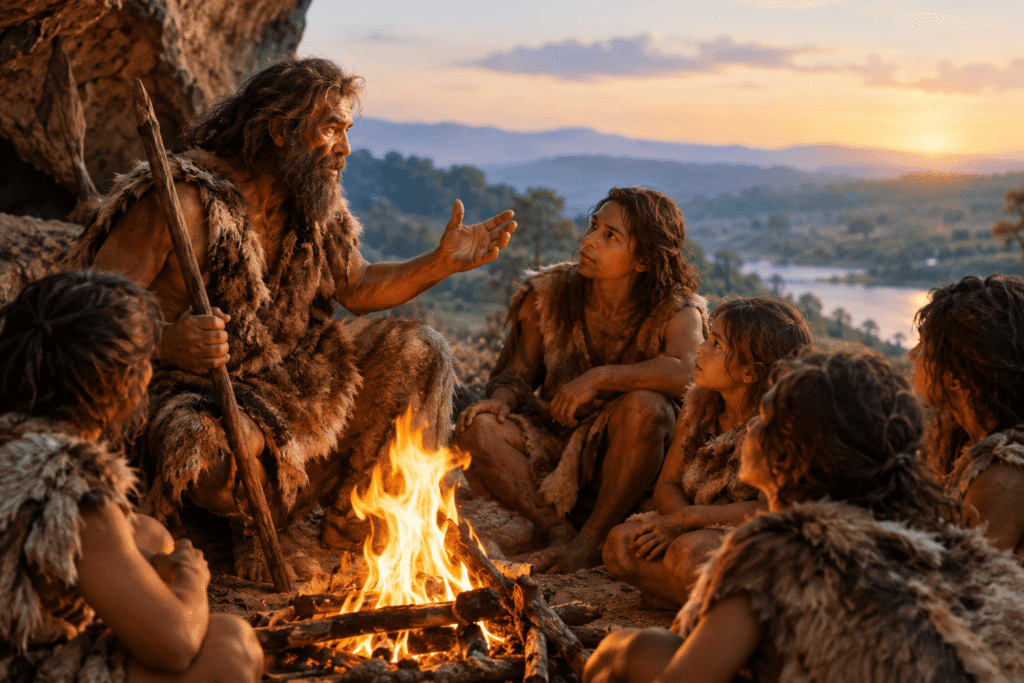
A) The Importance of Oral Traditions
An oral tradition is a way of passing knowledge, stories, experiences, and customs from one generation to another through speaking, listening, and storytelling.
For example, older members of a community might tell younger people about the lives of their ancestors. Memories of droughts, experiences of migration, traditional farming methods, and knowledge about local plants could be passed on in this way.
Folk songs, stories, proverbs, traditional knowledge, and religious or cultural practices also helped preserve information across generations.
Oral traditions have played an important role in Indian society. Many religious teachings, stories, cultural practices, and knowledge traditions were passed down orally for long periods.
These traditions helped communities remain connected to the experiences of their ancestors. They also allowed knowledge to spread beyond a single individual and reach other members of society.
B) Why Information Preserved Through Oral Traditions Matters
Oral traditions are more than a way of telling old stories. They can preserve a community’s experiences, ways of life, cultural memories, and knowledge accumulated over generations.
For example, local traditions may offer information about how a traditional festival began, how a village received its name, or why a particular community follows a certain custom.
However, information passed down orally can change over time. Details may be forgotten when a story is retold, and different generations may describe the same event in different ways.
For this reason, oral traditions should be studied within their social and cultural context. Whenever possible, researchers compare them with written records and other historical evidence.
In this way, oral traditions remain an important source for understanding the past.
4. The Development of Writing and Written History
Over time, humans developed different ways to preserve information and record transactions. The development of writing was an important milestone in this process.
Writing did not develop at the same time in every part of the world. Ancient regions such as Mesopotamia and Egypt developed writing systems thousands of years ago.
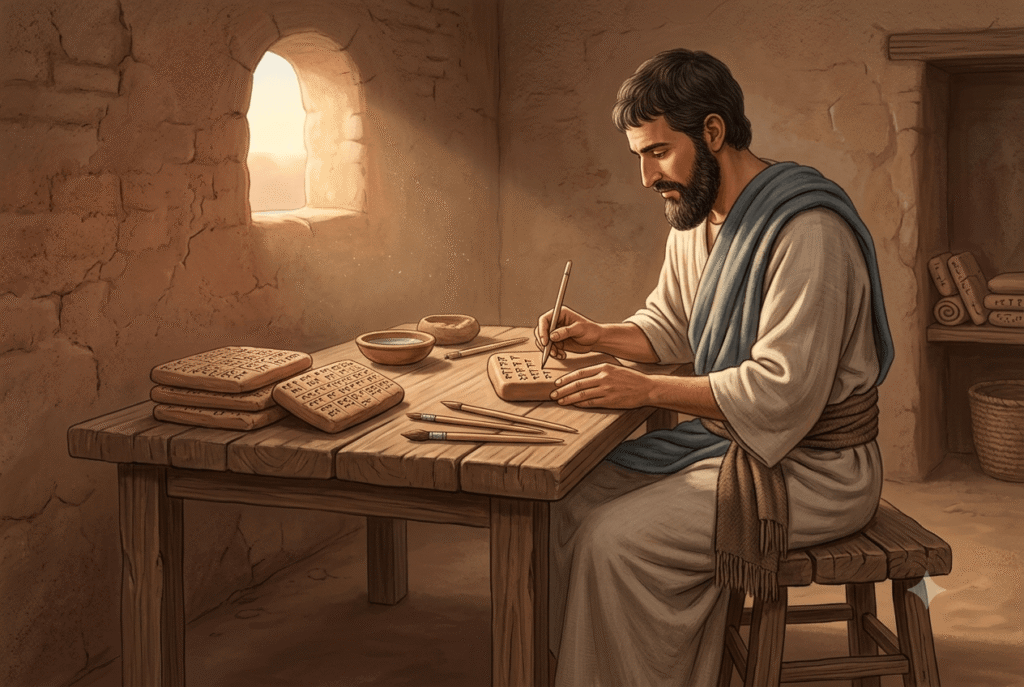
Some of the earliest written records dealt with counting goods, commercial transactions, administration, and other practical matters. Over time, people also recorded royal commands, inscriptions, religious literature, agreements, and information about important events.
One major advantage of written records was that information no longer depended entirely on people’s memories. It could be preserved in a more lasting form and passed on to future generations.
What Changed With Written Records?
The development of written records made several important things possible.
- Information about events and transactions could be preserved for longer periods.
- Administrative and commercial activities could be documented.
- Knowledge, ideas, and teachings could be passed on to future generations.
- Information about political, social, and religious life became available through written sources.
- Records from different periods could be compared.
In India, inscriptions, copper-plate grants, coins, manuscripts, and other sources also provide information about the past.
For example, the inscriptions of Emperor Ashoka provide information about the political administration of his time and the ethical principles he promoted.
Such written records help us understand important developments and aspects of society during earlier periods.
However, the development of writing, the appearance of written records, and the systematic writing of history are not the same process. Even after writing began to be used, records served different purposes and took different forms. Not every written record provides a detailed account of historical events.
It is also incorrect to assume that human history began only when written records became available. Life before writing can be studied through archaeological evidence and other sources.
5. How Do We Learn About Periods Before Writing?
If people from a particular period did not leave written records, how can we learn about their lives? This is a common question.
One important answer comes from archaeological research.
Archaeology involves studying ancient settlements, houses, tools, pottery, human and animal remains, burial sites, and other objects left behind by earlier communities.
These discoveries can provide valuable information about the lives of ancient humans.
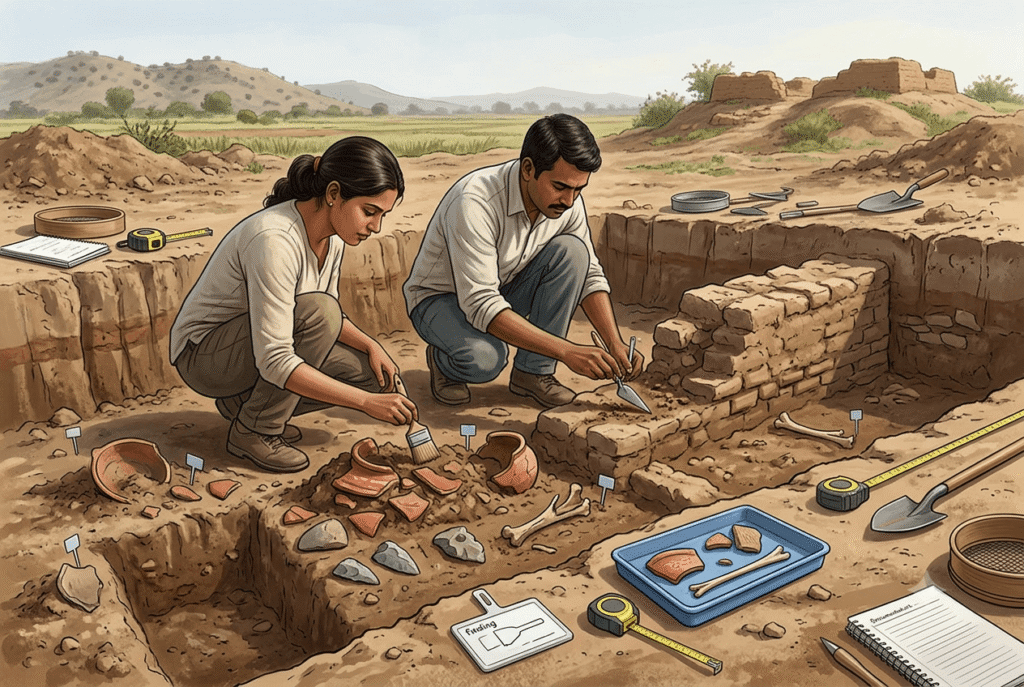
Examples of Archaeological Evidence
1. Stone tools
By studying how stone tools were made, what shapes they had, and where they were discovered, researchers can learn about ancient technologies and ways of life.
2. Ancient houses and settlements
The remains of old houses, hearths, and settlements can help researchers understand how people lived, how their communities were organized, and what mattered in their daily lives.
3. Pottery and other objects
The shapes of pots, their decorations, and the methods used to make them can reveal information about the skills, artistic expression, and everyday practices of earlier communities.
4. Grains, seeds, and animal remains
Seeds, plant remains, and animal bones found at archaeological sites can help researchers investigate what people ate, whether they practised agriculture, and how they used animals.
5. Human skeletons and burial sites
The study of human skeletons and burial sites can provide information about ancient people’s health, diets, and certain social or cultural practices. However, conclusions drawn from such evidence must remain within the limits of what the evidence can support.
These examples show that even when written records are unavailable, the study of surviving evidence can reveal important details about ancient human life.
For example, a coin discovered at a site may provide information about economic activity in that region. However, a single coin cannot establish the entire economic condition of a region. Other evidence must also be considered.
The absence of written records does not mean that nothing can be learned about a particular period. By carefully examining available evidence, researchers can discover a great deal about human life before written history.
6. Why Did Humans Need to Preserve Information About the Past?
Humans had several reasons to preserve information about the past and pass it on to future generations. These included practical knowledge, social identity, learning from experience, and the transfer of knowledge.
A) To Pass On Knowledge Essential for Survival
Humans had to adapt to changes in nature, find food, and respond to dangers in their surroundings.
Past experiences could provide useful knowledge about seasonal changes, the locations of water sources, and how to respond to particular situations. Passing this knowledge on could help others prepare for similar conditions.
Such experiences helped humans adapt to changing environments.
B) To Understand Identity and Culture
Questions such as who we are, who our ancestors were, how our languages developed, and how our traditions were passed down make the study of the past important.
History helps us understand the journey of a region, society, or community.
For example, history can help explain the origins of a festival, the importance of a historical site, or the development of traditional occupations in a particular region.
This gives us a broader understanding of our cultural heritage.
C) To Learn From Earlier Experiences
Studying past experiences can help us understand the consequences of certain decisions.
For example, if a region experienced a severe drought in the past, studying how people responded to it may offer useful lessons for water management today.
Similarly, studying conflicts, changes, and difficulties in earlier societies can help us understand different aspects of human behaviour and social conditions.
Studying history does not guarantee that every mistake from the past will never happen again. However, it gives us an opportunity to make better-informed decisions by considering earlier experiences.
D) To Pass Knowledge on to Future Generations
Preserving and sharing knowledge has played an important role in human progress.
When one generation passes its knowledge to the next, future generations can use it as a foundation for further research and development.
For example, today’s scientists study the experiments, observations, and discoveries of earlier researchers. They then use existing knowledge to conduct new research.
This means that every generation does not have to discover everything from the beginning.
This process of preserving and building on knowledge is important for the progress of human society.
E) To Understand Changes in Society
Many features of modern society developed over long periods of time.
Agriculture, trade, education, transportation, language, technology, and social institutions changed in different ways across different periods.
Studying these changes helps us understand how the world we live in today took shape.
For example, humans developed different tools and technologies over time to create modern transportation systems. Studying this development helps us understand the growth of human knowledge and creativity.
In this way, history provides important background for understanding the present.
7. Human Memory and the Ability to Think About the Past
To understand how humans developed an awareness of the past, it is also useful to consider memory and the ability to learn.
The human brain has different types of memory. One of them, known as episodic memory, is associated with remembering specific events and experiences from one’s own life.
For example, a person may remember an event from childhood, an experience during a journey, or something that happened several years ago.
The ability to remember past experiences and use them to guide future actions is important in human life.
However, individual memory and a society’s collective memory are two different things.
A person may remember events from their own life. But learning about events that happened many generations ago requires other ways of preserving information, such as stories, traditions, oral communication, and eventually written records.
Humans passed on experiences and knowledge through language, shared communication, and cultural traditions. Later, the development of writing provided more effective ways to preserve information.
As a result, the knowledge of human societies was no longer limited to the lifetime of a single individual. It could be passed on to future generations.
8. Why Evidence Matters in the Study of History
Historians use different types of historical sources to learn about past events.
These include written records, inscriptions, copper-plate grants, coins, archaeological remains, manuscripts, oral traditions, and other sources.
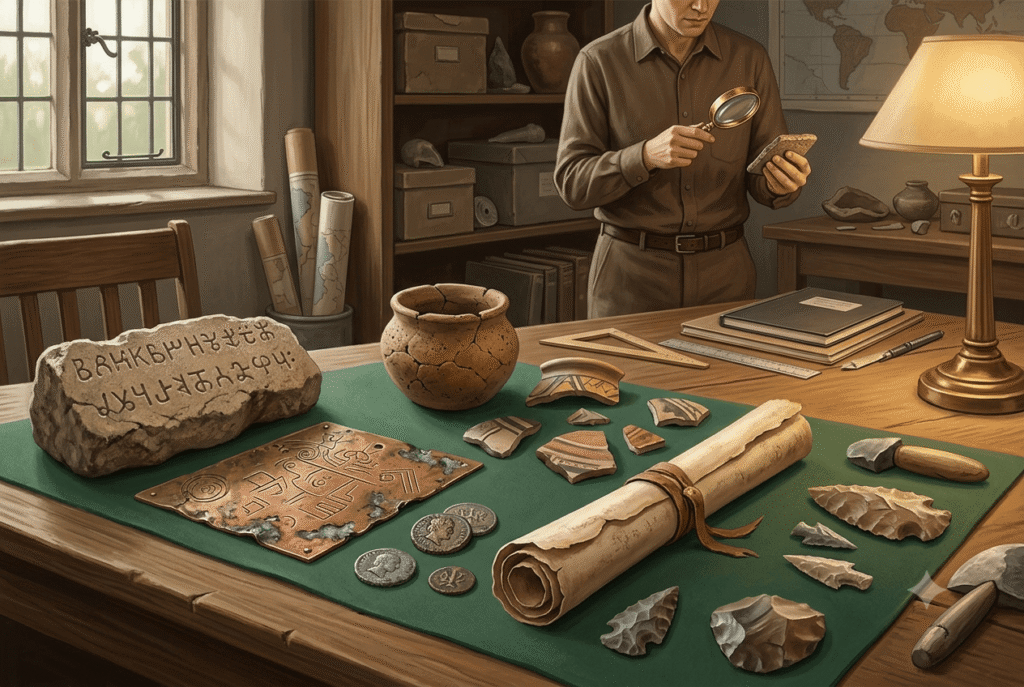
Each type of source can provide different kinds of information.
For example, coins may provide information about rulers’ names, symbols, or economic activity during a particular period. Inscriptions may contain royal orders, records of donations, administrative information, or details about other events.
Oral traditions, in turn, can provide information about a community’s cultural memories, experiences, and customs.
However, it is important to consider the date, context, and limitations of every source.
For example, if a ruler recorded a military victory in an inscription, the account might give greater importance to the ruler’s own perspective. Therefore, other evidence and the circumstances of that period must also be considered.
Historians often compare information from different sources. This helps them develop a broader and more consistent understanding of an event.
When new evidence is discovered, earlier historical conclusions may need to be reconsidered. Through this process of research, our understanding of the past continues to develop.
Therefore, studying history involves more than collecting information. Understanding where the information comes from, how reliable it is, and the context in which it was produced is equally important.
9. Why Is the Study of History Still Important Today?
Science and technology have made it easier to find information than ever before. The internet provides information about many historical events, individuals, and cultures.
However, finding information easily and understanding what it means are two different things.
Studying history helps us understand the background of events, compare changes across different periods, and interpret available information thoughtfully.
History helps us understand:
- The development of our societies and cultures.
- Ancient human life and ways of living.
- Changes in language, art, literature, and technology.
- The nature of earlier social and political systems.
- How human experiences and knowledge were passed on to future generations.
- The historical background of many present-day circumstances.
History is not studied only to pass examinations or memorize old dates. It offers an opportunity to understand the long journey of human society.
For example, studying a historical site can reveal information about the architecture, technology, social life, and cultural values of the period in which it was built. Similarly, studying ancient trade routes can help us understand how economic and cultural relationships developed between different regions.
In this way, history does more than tell us about the past. It also helps us understand the background of many things in the present.
Conclusion
History is more than a collection of past events. It is an important way to understand the development of human life, society, culture, and knowledge.
Humans learned from their experiences, shared them with others, and preserved knowledge through oral traditions. Later, the development of writing made it possible to record information in written form. Over time, different types of written records and historical sources preserved information about many events from the past.
Today, we try to understand ancient human life through archaeological remains, inscriptions, coins, manuscripts, oral traditions, and other forms of evidence.
Studying history helps us understand the lives of our ancestors, the knowledge they developed, the changes in their societies, and the growth of human culture. It also helps us understand present-day circumstances by considering experiences from the past.
We may never obtain complete information about every event in the past. Evidence for some events may be missing, and the interpretation of other evidence may have limitations. Even so, by examining the available evidence carefully and critically, we can expand our knowledge and develop a better understanding of the human journey.
Knowledge of the past helps us understand where we came from, while awareness of the present tells us where we stand today. By considering both, we can look toward the future with greater understanding.