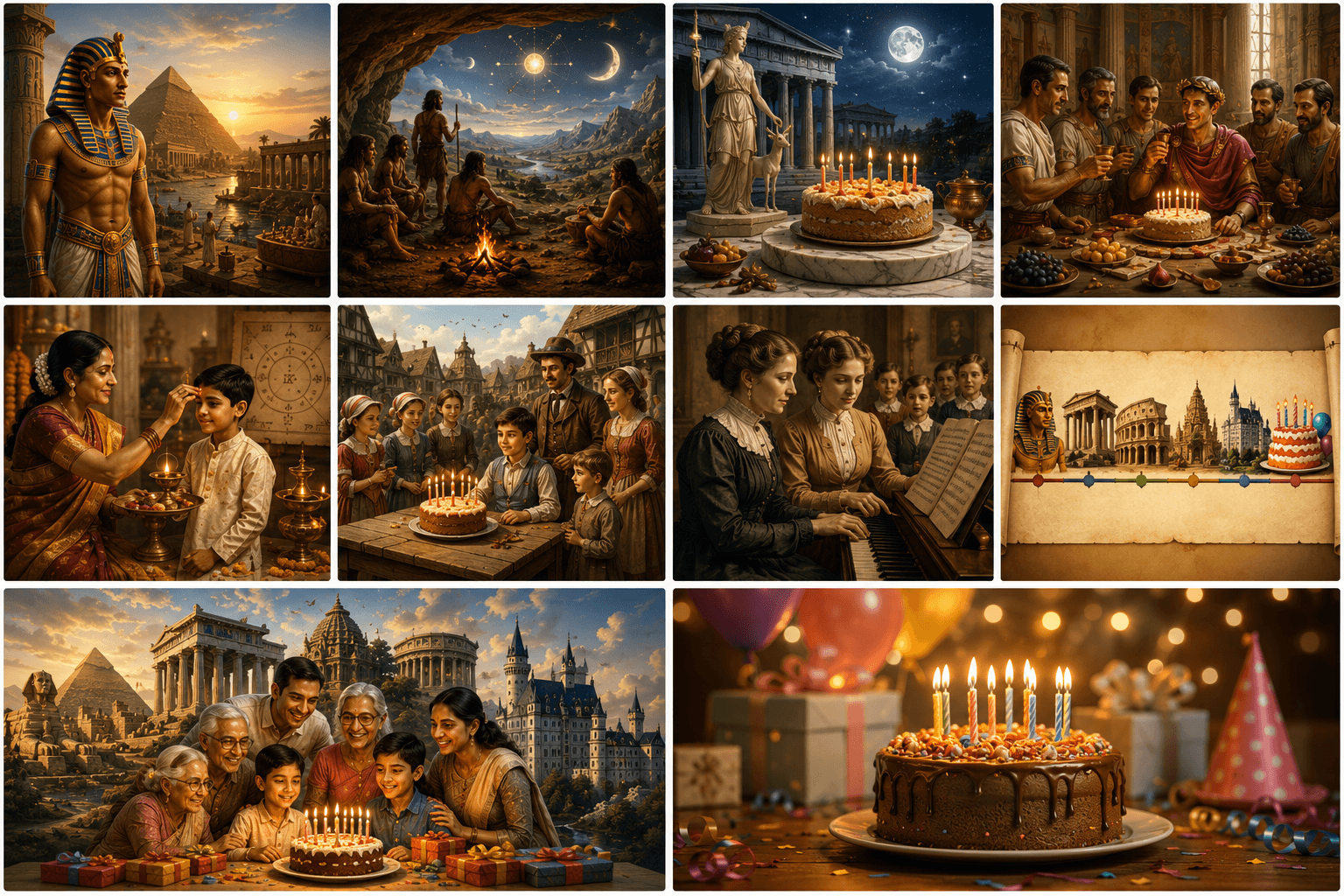
From Ancient Egypt and Greece to Rome, India, Germany, and the modern birthday cake — discover the fascinating history behind the celebration we all know and love.
Hello, readers!
A birthday is one of the most special days in our lives. The excitement of waiting for midnight, receiving wishes from friends and family, cutting a cake, blowing out candles, and spending time with loved ones have become such familiar traditions that we rarely stop to wonder where they actually came from.
But have you ever thought about these questions?
How did people know their birth dates when calendars did not exist?
Where did the tradition of celebrating birthdays begin?
Why do we put candles on birthday cakes?
Why do we make a wish before blowing them out?
And if people in ancient times did not calculate their age the way we do today, how did the idea of a birthday develop?
The history of birthdays goes back thousands of years. From the pharaohs of Ancient Egypt and the religious traditions of Ancient Greece to Roman celebrations, Indian customs, Germany’s Kinderfest, birthday cakes, candles, and the famous “Happy Birthday to You” song, the journey of the birthday celebration is far more fascinating than it may seem.
In this article, we will travel through this long history and discover how a simple celebration of life gradually became a tradition followed across the world.
Table of Contents
- The Concept of Age: Did Ancient People Know Their Age?
- The Ancient History of Birthdays: From Egyptian Pharaohs to Greek Candles
- Ancient Greece: Where Did Birthday Cakes and Candles Come From?
- The Roman Empire: When Did Ordinary People Start Celebrating Birthdays?
- The Indian Tradition of Birthdays: More Than Just Growing Older
- Why Are Tithi and Nakshatra Important in Indian Birthdays?
- Birth Charts and the Connection with Birthdays
- Why Are Lamps Lit Instead of Being Blown Out?
- Why Is Aukshan or Aarti Performed on Birthdays?
- Why Is Sage Markandeya Remembered on Birthdays?
- Important Life Milestones in Indian Tradition
- The Real Meaning of a Birthday in Indian Tradition
- The Modern Birthday: Germany’s Kinderfest and the Birthday Cake
- How Did the “Happy Birthday to You” Song Begin?
- Conclusion: The Fascinating Journey of the Birthday
1. The Concept of Age: Did Ancient People Know Their Age?
Today, as a birthday approaches, people often say, “I am one year older!”
For some, growing older is exciting. For others, it can be a reminder that another year has passed.
But thousands of years ago, people did not necessarily think about age in the numerical way we do today.
How Did People Measure Age in Ancient Times?
In the earliest stages of human history, life was closely connected with nature. People observed seasons, rainfall, harvest cycles, and the different stages of life.
Instead of saying, “I am 30 years old,” someone might describe their age by the number of winters or rainy seasons they had experienced.
Childhood, youth, and old age were more meaningful indicators of a person’s stage of life than an exact numerical age.
So, the modern idea of constantly thinking about whether someone is 25, 30, 40, or 50 years old was not always part of human life.
When Did People Start Recording Age?
As civilizations developed, large kingdoms and organized governments emerged. Administrations needed accurate information about their populations.
Age became important for purposes such as taxation, inheritance, citizenship, and military service.
The Romans, in particular, developed increasingly organized systems of record-keeping. Keeping track of birth dates made it easier to determine a person’s age and maintain official records.
This gradual development of calendars, records, and age calculation eventually helped birthday celebrations become more organized and widespread.
2. The Ancient History of Birthdays: From Egyptian Pharaohs to Greek Candles
Today, birthdays are celebrated by people of almost every age and social background.
But this was not always the case.
In ancient societies, celebrations connected with birth or royal status were often limited to rulers, religious figures, or members of the elite. Over thousands of years, the tradition gradually expanded to ordinary people.[
Ancient Egypt: Around 3000 BCE
According to commonly cited historical accounts, some of the earliest traditions associated with birthday-like celebrations can be traced to Ancient Egypt.
However, there is an important difference between those celebrations and the birthdays we know today.
Ordinary Egyptians did not celebrate their birthdays in the modern sense. The celebrations were closely connected with the pharaoh, the king of Ancient Egypt.
The pharaoh was not regarded merely as a political ruler; he was associated with divine authority and was considered a sacred figure.
When a pharaoh was crowned, his coronation was understood as a kind of “new birth” into his divine role. Therefore, the coronation became an important occasion of celebration.
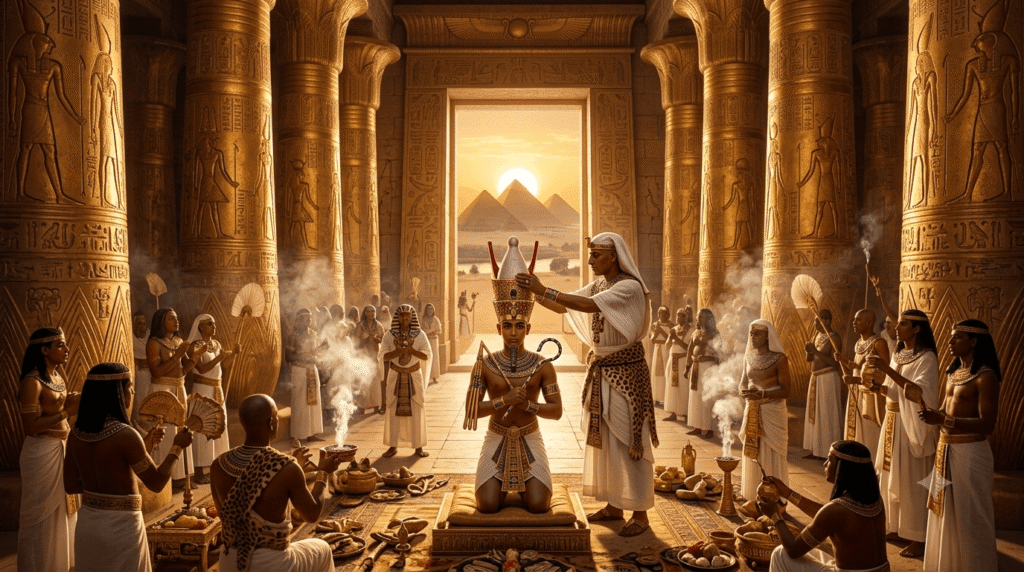
This was very different from today’s family birthday party. It was a royal and religious tradition rather than a celebration for every individual.
3. Ancient Greece: Where Did Birthday Cakes and Candles Come From?
If there is one thing that immediately comes to mind when we think of a modern birthday, it is probably a cake with candles.
Interestingly, the history of candles and cakes takes us back to Ancient Greece.
Greek religious traditions included offerings to deities, and the goddess Artemis was associated with the moon.
According to a popular historical interpretation, worshippers prepared round cakes representing the full moon and placed candles on them. The glowing candles were associated with the radiance of the moon.
There was also a belief that the smoke rising from extinguished candles could carry prayers and wishes toward the gods.
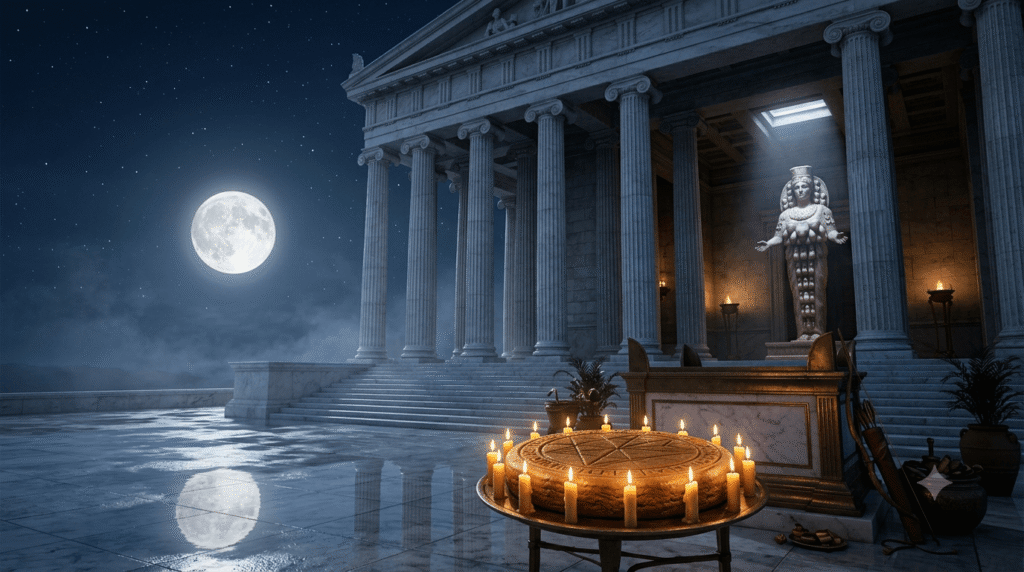
Whether or not the modern birthday candle tradition can be traced directly to this practice, the similarity is fascinating.
Today, we place candles on a birthday cake, make a wish, and blow them out. Thousands of years ago, fire, light, religious devotion, and wishes were already closely connected in human celebrations.
Over time, such symbolic traditions were transformed and adapted by different cultures.
4. The Roman Empire: When Did Ordinary People Start Celebrating Birthdays?
Ancient Egypt connected special celebrations with pharaohs, and Ancient Greece had religious traditions involving cakes and candles.
But the tradition of celebrating personal birthdays became much more developed during the Roman era.
Initially, public birthday celebrations were mainly associated with men. Women’s birthdays became more commonly recognized in later periods as social customs changed.
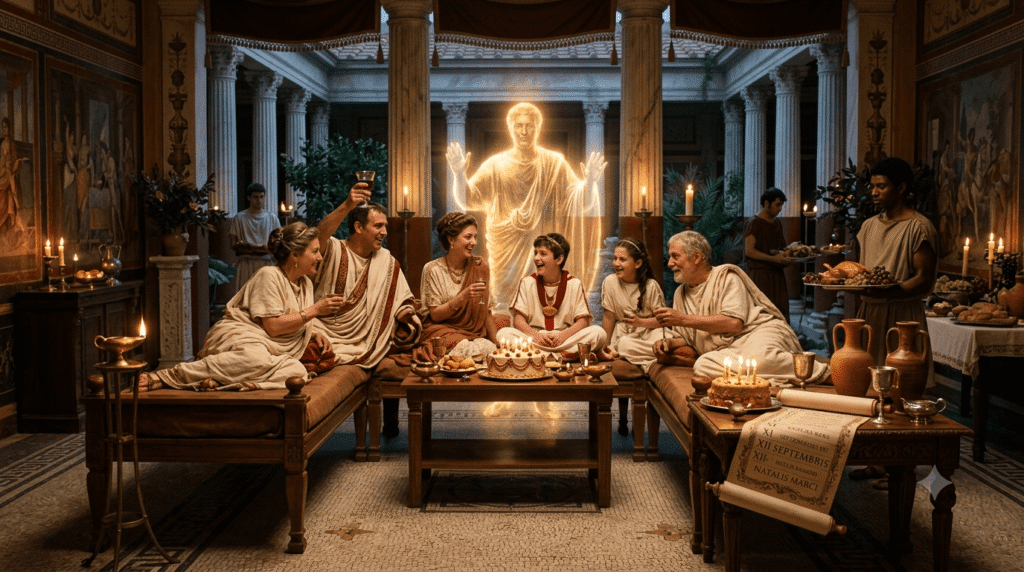
For Romans, birthdays were not simply parties; they were also connected with religious beliefs.
What Was the Roman “Genius”?
Today, the word “genius” usually means an exceptionally intelligent person.
But in Ancient Rome, the word had a completely different meaning.
Romans believed that every person was accompanied by a protective spirit known as a Genius. This guardian spirit was believed to protect the individual, guide them through life, and support their success.
Therefore, a birthday was not only a celebration of the person. It was also a time to honor and show gratitude toward the protective spirit associated with that person.
This belief gives us an interesting insight into how ancient societies viewed birthdays—not simply as celebrations of age, but as occasions connected with life, protection, and gratitude.
How Did Romans Know Their Birth Dates?
How could people remember an exact birth date in a world without smartphones, digital calendars, or modern clocks?
The Roman world had relatively advanced systems of astronomy, mathematics, and calendar-making.In 45 BCE, Julius Caesar introduced the Julian Calendar.
The calendar was based on the solar year and contained 365 days, with an additional day added during leap years.
A standardized calendar made it easier to record important dates, including births, government events, taxation, and other official matters.
However, the Julian Calendar was not perfectly accurate. Over centuries, the small difference between the calendar year and the actual solar year gradually accumulated.
This eventually led to calendar reforms.
In 1582, Pope Gregory XIII introduced the Gregorian Calendar, which corrected the leap-year system and brought the calendar more closely into alignment with the solar year.
The Gregorian calendar later became the standard calendar used by most countries around the world.
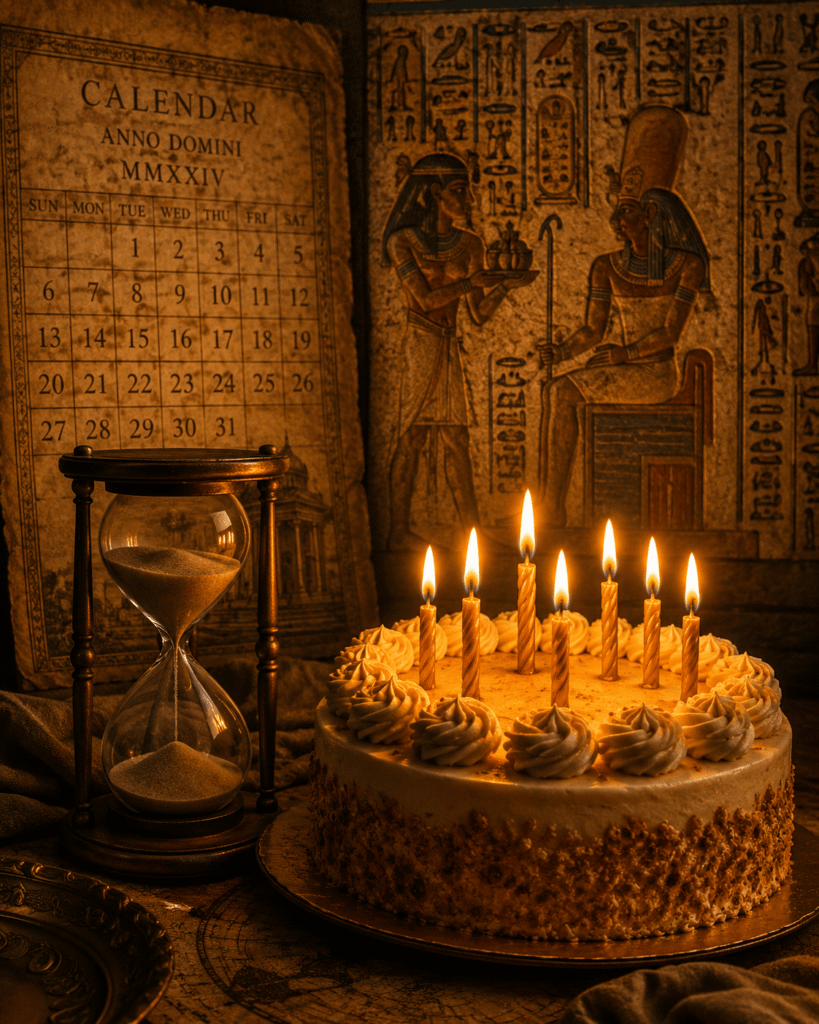
The World’s Oldest Written Birthday Invitation
One of the most fascinating pieces of evidence connected with ancient birthday celebrations comes from the Vindolanda Tablets, discovered in England.
Among these ancient Roman wooden writing tablets is a letter associated with Claudia Severa, a Roman woman who invited a friend to her birthday celebration.
The letter dates to around the 1st century CE, generally around 100 CE.
It is widely regarded as one of the earliest known surviving written birthday invitations.
Nearly two thousand years ago, someone was already writing a personal invitation asking a friend to join a birthday celebration.
That small piece of writing provides a remarkable glimpse into everyday social life in the Roman world.
5. The Indian Tradition of Birthdays: More Than Just Growing Older
When we talk about the history of birthdays, our attention often turns toward Egypt, Greece, and Rome.
But India has a very different way of looking at birthdays.
In Indian tradition, a birthday has historically been associated not only with celebration but also with spirituality, blessings, family, and gratitude.
Growing older was not necessarily viewed simply as becoming old. Age could also represent experience, wisdom, and maturity.
How Old Is the Tradition of Birthdays in India?
There is no single historical date or ruler that can be identified as the exact beginning of birthday celebrations in India.
However, references to birth-related rituals, dates, lunar calculations, and ceremonies can be found across India’s ancient religious and cultural traditions.
The Vedas, Grihya Sutras, Dharmashastras, and Puranas contain references connected with birth rituals and observances.
Ancient Indian birthday traditions were not based on cutting a cake or blowing out candles.
Instead, birth anniversaries could involve bathing, prayers, religious rituals, charity, blessings, and remembrance of the divine.
This makes the Indian tradition fundamentally different from the modern Western-style birthday party.
6. Why Are Tithi and Nakshatra Important in Indian Birthdays?
Today, many people celebrate birthdays according to the fixed date of the Gregorian calendar.
But traditional Indian calendars follow a different system.
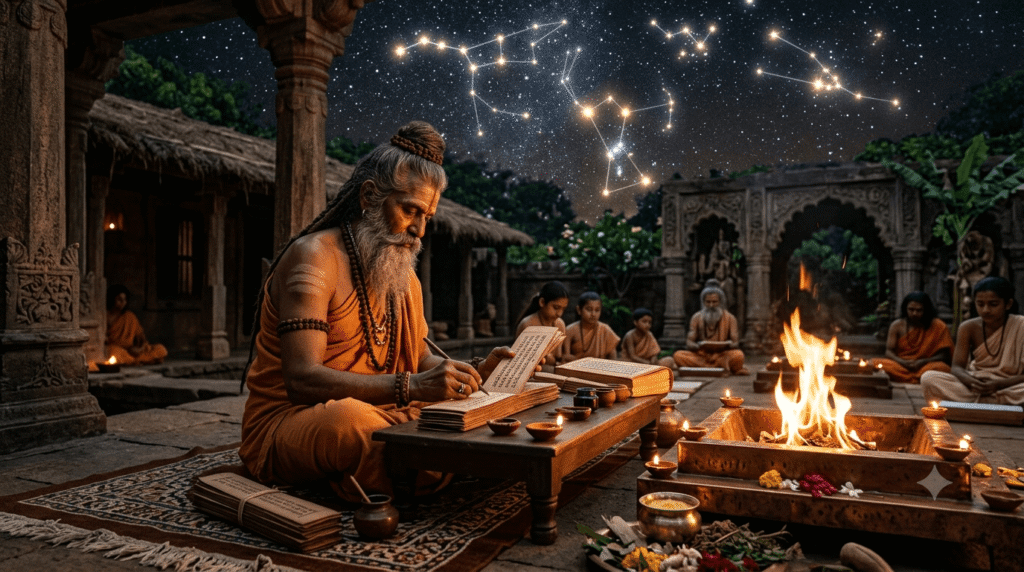
The Tithi (lunar day), month, and Nakshatra (birth star) are important in determining a person’s traditional birth anniversary.
According to this tradition, the birthday is observed when the same or corresponding Tithi and Nakshatra associated with the person’s birth occur again.
The underlying idea is that the lunar position and celestial conditions associated with one’s birth are given special significance.
For this reason, a traditional birthday is not merely a reminder that another year has passed. It is also a day for prayer, reflection, gratitude, and seeking blessings for the year ahead.
7. Birth Charts and the Connection with Birthdays
In traditional Indian astrology, a person’s birth chart, or Janma Kundali, is prepared using information such as:-
- Birth date or Tithi
- Birth time- Nakshatra
- Planetary positions
- Other astronomical calculations
Because of this, the birth anniversary can carry a deeper personal and spiritual meaning.
The day may be used to reflect on one’s life, express gratitude to the Divine, seek the blessings of elders, and pray for health and prosperity in the coming year.
8. Why Are Lamps Lit Instead of Being Blown Out?
One of the most visible differences between traditional Indian birthday customs and modern Western celebrations is the treatment of fire and light.
In many Western-style birthday celebrations, candles are blown out after making a wish.
In Indian tradition, however, fire (Agni) is considered sacred and is associated with divine energy and life.
Therefore, instead of extinguishing a flame, families may light a lamp or traditional diya and keep it burning during an auspicious occasion.
This is one reason why many Indian families light a lamp before cutting a birthday cake.
The symbolism is simple yet profound:
Instead of putting out the light, keep the light burning.
9. Why Is Aukshan or Aarti Performed on Birthdays?
In many Indian families, a birthday is accompanied by Aukshan or Aarti, traditionally performed by the mother or an elder family member.
Aukshan may involve a thali containing a lamp, kumkum, rice grains (akshata), a betel nut (supari), and gold.
The ritual represents love, protection, and blessings.
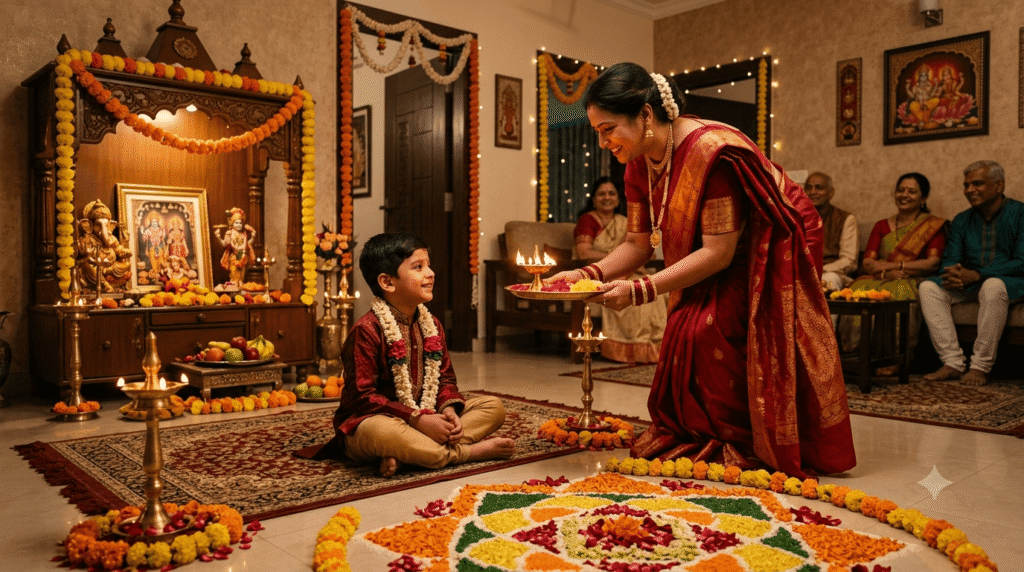
The family wishes the person:-
- Long life (Ayushya)
- Good health (Arogya)
- Happiness and prosperity (Sukha-Samriddhi)
- Protection from negative energies (Drishtidosha)
So, while a modern birthday party may focus on cake, gifts, and entertainment, the traditional Indian celebration places greater emphasis on family blessings and spiritual well-being.
10. Why Is Sage Markandeya Remembered on Birthdays?
In Indian traditions, Sage Markandeya is associated with longevity and victory over death (Mrityunjaya).
According to Puranic tradition, Markandeya received divine grace from Lord Shiva and was blessed with an exceptionally long life.
Because of this association, some families remember or worship Sage Markandeya on birthdays and pray for long life, good health, and protection from difficulties.
In many traditional households, the birthday begins with a ritual bath, prayers, and Markandeya Puja before any social celebrations begin.
11. Important Life Milestones in Indian Tradition
Indian culture places special importance on specific chronological milestones in life.
Shashtipurti — 60 Years
Completing 60 years is considered a major milestone.
A special ceremony may be organized by the family to honor the person’s life journey, mark the completion of major worldly duties, and pray for good health in the years ahead.
Sahasra Chandra Darshan — Around 80 Years and 8 Months
Another remarkable milestone is Sahasra Chandra Darshan.
A person who reaches approximately 80 years and 8 months has witnessed around 1,000 full moons during their lifetime.
A special ceremony may be held to commemorate this extraordinary milestone of longevity, experience, and wisdom.
12. The Real Meaning of a Birthday in Indian Tradition
In the traditional Indian understanding, a birthday is much more than a cake, gifts, or a party.
It is a meaningful day to:-
- Express gratitude to the Divine
- Thank one’s parents and ancestors
- Seek blessings from elders
- Reflect on personal growth and actions over the past year
- Make positive resolutions (Sankalpa) for the year ahead
In this sense, a birthday becomes a celebration of life itself, rather than simply a reminder that one’s age has increased.
13. The Modern Birthday: Germany’s Kinderfest and the Birthday Cake
So, when did the modern birthday party—with a cake, candles, wishes, and celebrations—become popular?
One important chapter in this story comes from 18th-century Germany.
What Was Kinderfest?
A German tradition known as Kinderfest became associated with children’s birthday celebrations.
A special cake was prepared for the child, and candles were placed on it according to the child’s age, along with an additional candle representing hope for another healthy year.
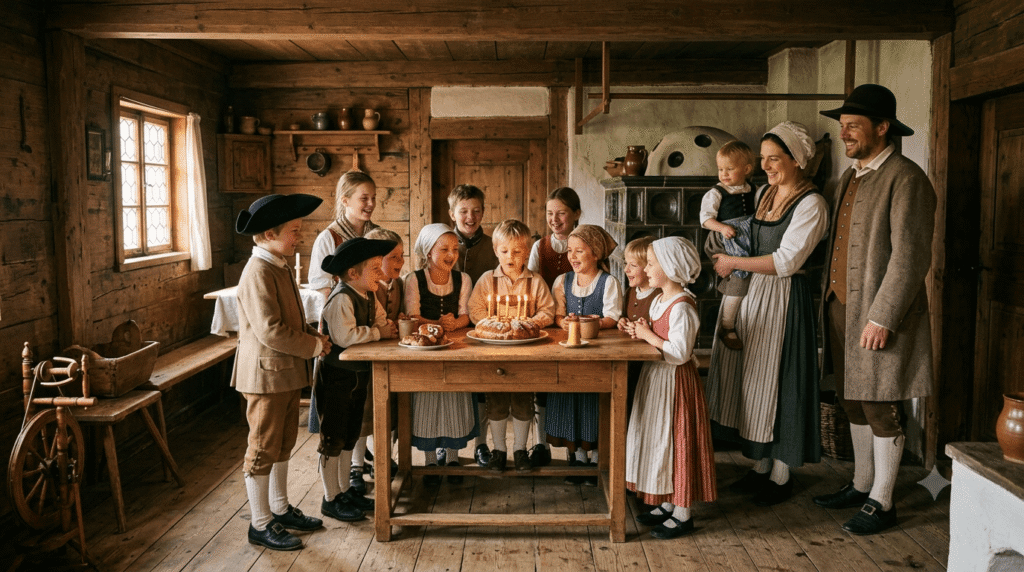
The candles were traditionally kept burning during the day.
Later, surrounded by family and friends, the child would blow them out and make a wish.
This combination of birthday + cake + candles + wish + family celebration became an important precursor to the modern birthday tradition we know today.
14. How Did the “Happy Birthday to You” Song Begin?
Today, it is almost impossible to imagine a birthday party without the famous song:
“Happy Birthday to You…”
But the surprising fact is that the song was not originally written as a birthday song.
In 1893, American sisters Patty Hill and Mildred J. Hill, who were schoolteachers, composed a tune titled “Good Morning to All” for young children in the classroom.
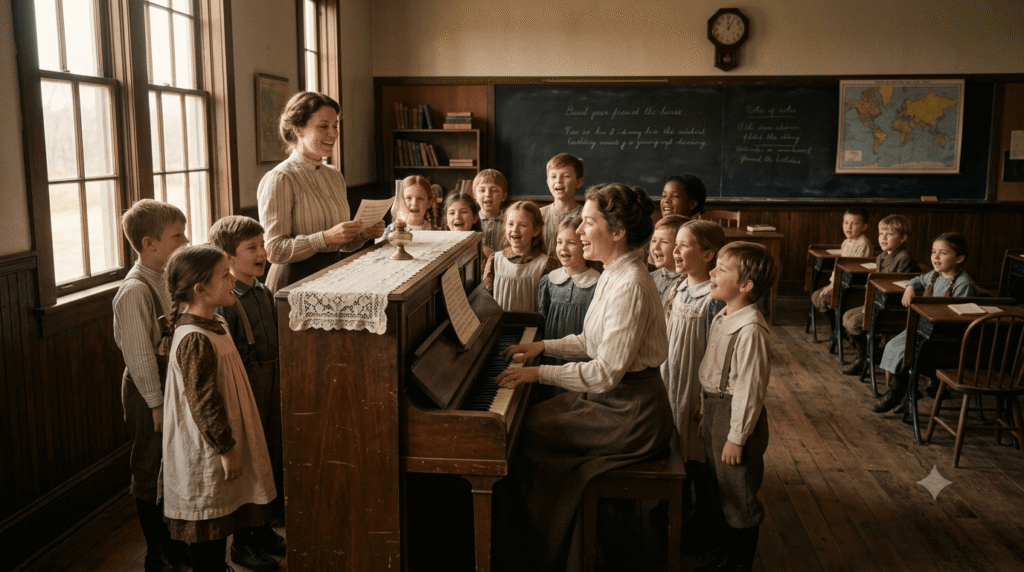
The melody became popular, and people gradually began adapting the lyrics for birthday celebrations.
Eventually, it evolved into “Happy Birthday to You,” becoming one of the world’s most recognized songs.
Conclusion: The Fascinating Journey of the Birthday
After looking at this long journey, one thing becomes clear:
The birthday we celebrate today was not created in a single place or at a single moment. It evolved over thousands of years.
From the royal traditions of Ancient Egypt to the religious symbolism of Ancient Greece, from Roman birthday customs to India’s Tithi, Nakshatra, and Aukshan, and finally Germany’s Kinderfest, this celebration has continuously adapted over time.
Yet beneath all these changes, one core idea has remained constant:
Celebrating life.
A birthday is not simply about becoming one year older.
It is an opportunity to look back at the experiences we have gathered, appreciate the people who have walked beside us, express gratitude for life, and look forward to a new chapter.
Perhaps that is why birthdays have survived for thousands of years despite changing cultures, calendars, and traditions.
After all, age may be just a number—but every birthday is a celebration of the life behind that number.
So, the next time you light a birthday candle, cut a cake, or hear someone sing “Happy Birthday,” remember that you are participating in a tradition shaped by thousands of years of human history.
Which part of the history of birthdays did you find the most fascinating?Did you know about the ancient connection between birthdays, religion, and calendars? Or were you surprised to learn that “Happy Birthday to You” was not originally written as a birthday song?Share your thoughts in the comments and keep visiting Jigyasa Manthan for more fascinating stories from history, culture, science, and tradition.
Share your thoughts in the comments and keep visiting Jigyasa Manthan for more fascinating stories from history, culture, science, and tradition.