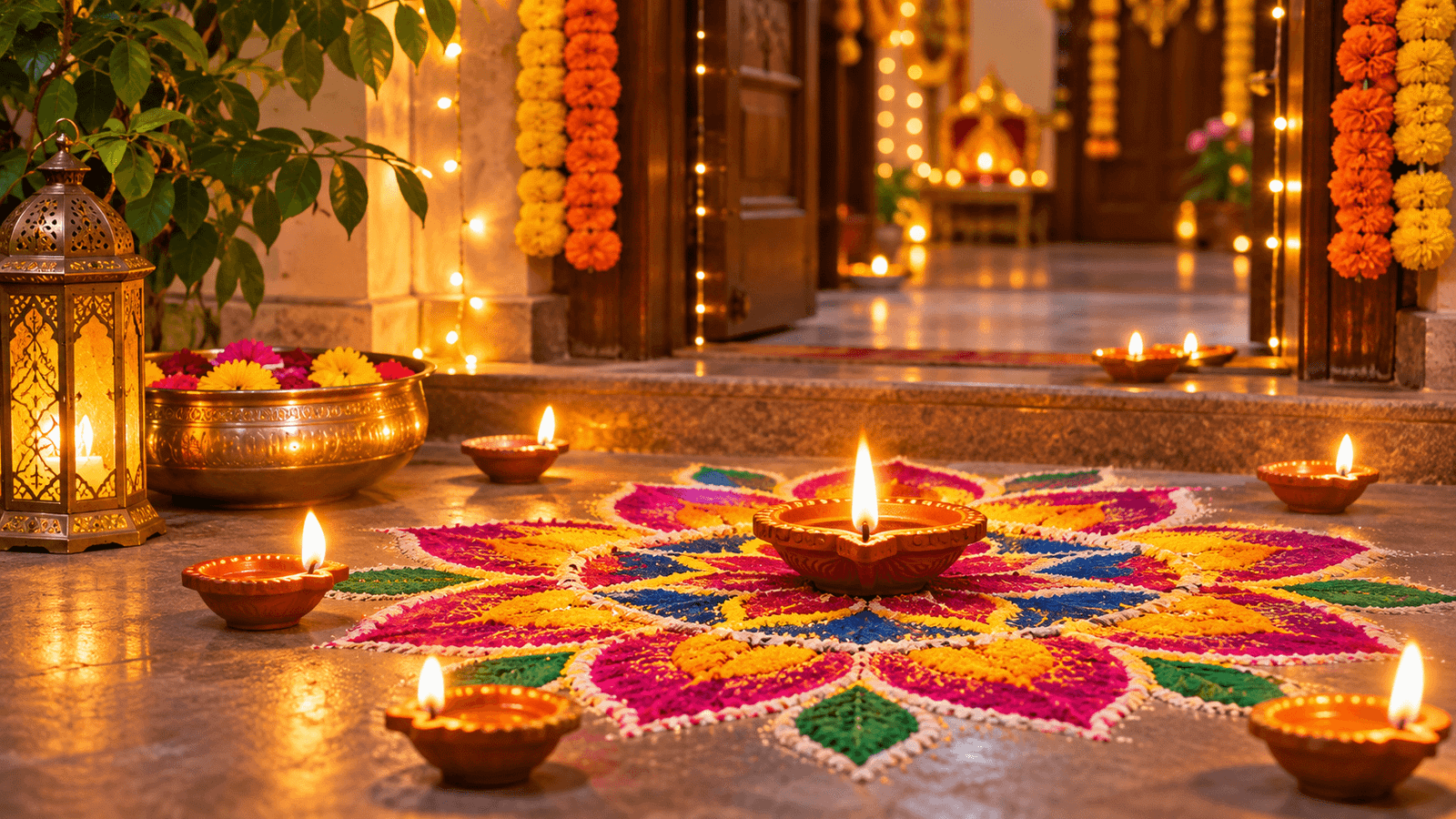
When Diwali arrives, the atmosphere changes instantly. Homes are swept clean, bright rangoli patterns show up at doorsteps, oil lamps begin to flicker, and the air carries the irresistible aroma of homemade sweets and snacks.
For kids, Diwali means new clothes, firecrackers, holidays, and endless excitement. But as we grow older, the meaning shifts. We start to see that Diwali is much more than just a festival of lights—it is a warm embrace of culture, family bonds, and timeless traditions.
So, what makes Diwali so special? Let’s dive into the history, the stories, and the beautiful customs behind it.
Table of Contents
Why Is It Called Diwali?
The word Diwali is a shortened, everyday version of the ancient Sanskrit word Deepavali.
“Deepa” means a lamp or light, while “Avali” means a row or continuous line.
Put them together, and Deepavali literally means “a row of lamps.” Lighting small clay diyas in a line is our timeless way of keeping this meaning alive.
But beyond brightening our front porches, light has a deeper meaning across Indian traditions: it symbolizes knowledge overcoming ignorance and hope triumphing over darkness.
Why Is There No Single Story for Diwali?
One of the most fascinating things about Diwali is that it does not have just one story behind it. Different regions and communities connect the festival with different legends and traditions.
The Return to Ayodhya
In North India, Diwali is strongly associated with the return of Lord Rama, Sita, and Lakshmana to Ayodhya after 14 years of exile and Rama’s victory over Ravana.
According to the traditional story, the people of Ayodhya welcomed them by lighting rows of earthen lamps.
The Victory of Light and Goodness
In parts of southern India, Diwali is associated with Lord Krishna’s victory over the demon king Narakasura.
The story represents the victory of good over evil and the arrival of a new, brighter beginning.
The Emergence of Goddess Lakshmi
Diwali is also closely associated with Goddess Lakshmi, the goddess of wealth and prosperity.
In Hindu traditions, Lakshmi is connected with the Samudra Manthan, or the churning of the cosmic ocean, from which she emerged.
This association is one reason Lakshmi Puja holds such an important place during Diwali celebrations.
The Legend of King Bali
In Maharashtra and some other traditions, Diwali is also connected with King Bali, remembered for his generosity and devotion.
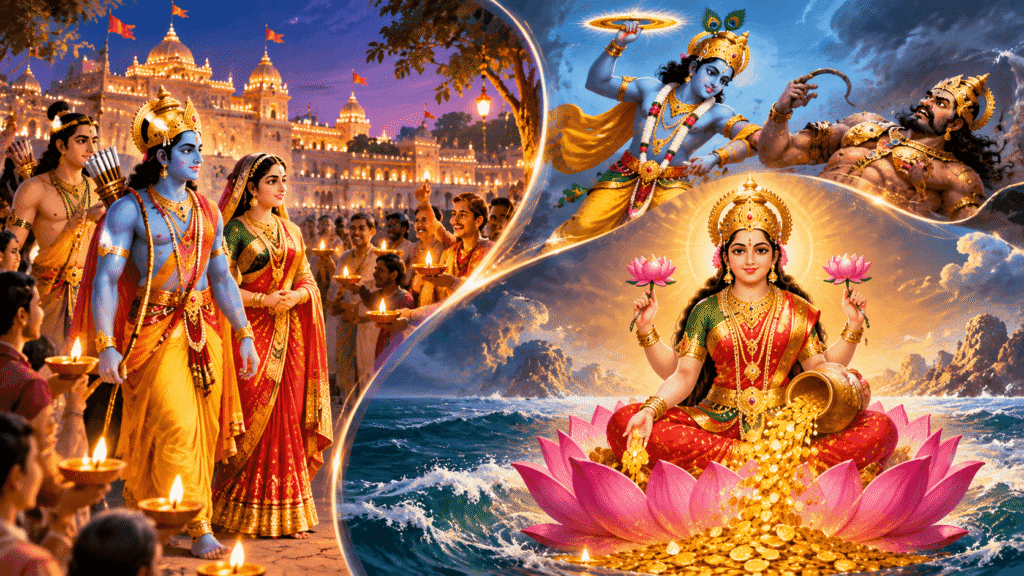
These stories may differ from one region to another, but together they show something beautiful: Diwali is a festival with many cultural roots, woven together by ideas of light, goodness, prosperity, renewal, and hope.
Why Does the Date Always Change?
If you’ve ever wondered why Diwali shifts between October and November every year, the answer lies in the traditional Indian calendar system.
Unlike the Gregorian calendar, traditional Indian calendars use both lunar and solar movements in their calculations. The main night of Diwali falls on Kartika Amavasya, the new moon night associated with the month of Kartik.
Because lunar phases do not line up perfectly with the fixed dates of the Gregorian calendar, the date of Diwali changes from year to year.
The Main Days of Diwali: A Rhythm of Celebrations
Diwali is often described as a five-day festival, although the exact customs and sequence can vary by region. In Maharashtra, several important days are closely associated with the Diwali season.
1. Vasu Baras (Govatsa Dwadashi)
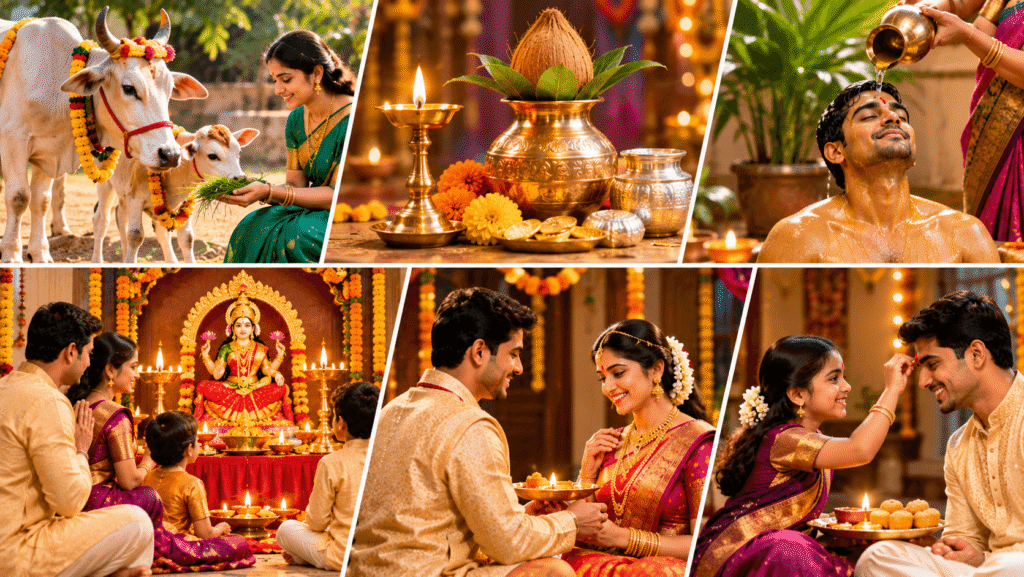
Vasu Baras is associated with gratitude toward cows and the agricultural traditions of rural India.
For many families, it marks the beginning of the festive period and reflects the traditional importance of cattle in Indian rural life.
2. Dhanteras
Dhanteras marks an important beginning to the Diwali celebrations.
It is associated with Lord Dhanvantari, health and Ayurveda, while many families also consider the day auspicious for purchasing utensils, precious metals, or other useful items.
3. Naraka Chaturdashi (Choti Diwali)
Naraka Chaturdashi is popularly known as Choti Diwali in many parts of India.
In Maharashtra, the morning traditionally begins early with Abhyanga Snan, an oil bath followed by a bath with fragrant preparations.
New clothes, festive food, and the excitement of Diwali begin to fill the home.
4. Lakshmi Puja (The Main Night)
For many families, Lakshmi Puja is the spiritual heart of Diwali.
Homes are cleaned and decorated, diyas are lit, rangoli is created at the entrance, and families offer prayers for peace, prosperity, and well-being.
The glow of lamps, the fragrance of flowers, and the warmth of family gatherings make this evening especially memorable.
5. Bali Pratipada & Diwali Padwa
The day after Lakshmi Puja is celebrated as Bali Pratipada or Diwali Padwa in Maharashtra.
It is associated with new beginnings and is also an important day for celebrating the bond between husbands and wives.
In Maharashtra, Diwali Padwa is considered one of the most auspicious days of the year.
6. Bhai Dooj
Bhai Dooj celebrates the loving bond between brothers and sisters.
Sisters traditionally apply a tilak to their brothers, while families come together to celebrate affection, care, and the strength of family relationships.
The Magic of Diwali Food (Faral)
Ask anyone from Maharashtra what makes Diwali feel like Diwali, and chances are the answer will include Faral.
Weeks before the festival, kitchens become busy preparing traditional treats such as chakli, karanji, ladoos, chivda, shankarpali, and sev.
But the real magic of Faral is not just the food.
It is the sharing.
Families prepare extra food for relatives, friends, neighbours, and guests. People visit one another, exchange homemade treats, sit together, talk for hours, and turn ordinary moments into memories.
That is what makes Diwali food so special—it carries the warmth of relationships from one home to another.
A Celebration Beyond Borders
Diwali is no longer celebrated only in India.
Indian communities around the world—from London and New York to Canada, Australia, Singapore, and many other places—continue to keep the traditions of Diwali alive.
Homes are decorated with diyas, cultural events are organized, families gather for prayers and meals, and people share sweets with friends and neighbours.
As a result, Diwali has become a celebration that reaches far beyond geographical borders while still holding on to its Indian roots.
What Does Diwali Really Mean?
Diwali is often associated with new clothes, delicious food, decorations, gifts, and fireworks. But its meaning goes much deeper than the things we buy or the celebrations we see.
Sometimes, Diwali is about slowing down.
It is about calling an old friend.
Visiting family.
Forgiving an old grievance.
Sharing food with someone who needs it.
Sitting together without rushing.
And simply being grateful for the people who make life brighter.
Whether it is a single diya glowing quietly in a village home or thousands of lights shining across a huge city, the message remains remarkably simple: darkness does not last forever.
There is always room for light, hope, warmth, and a new beginning.
JigyasaManthan wishes you and your family a very Happy Diwali.
May the festival of lights bring endless knowledge, happiness, and positivity into your life.
References
- Incredible India — Ministry of Tourism, Government of India
- Utsav Portal — Ministry of Tourism, Government of India
- Press Information Bureau — Government of India
- Maharashtra Tourism — Government of Maharashtra